SR30-M2-D1
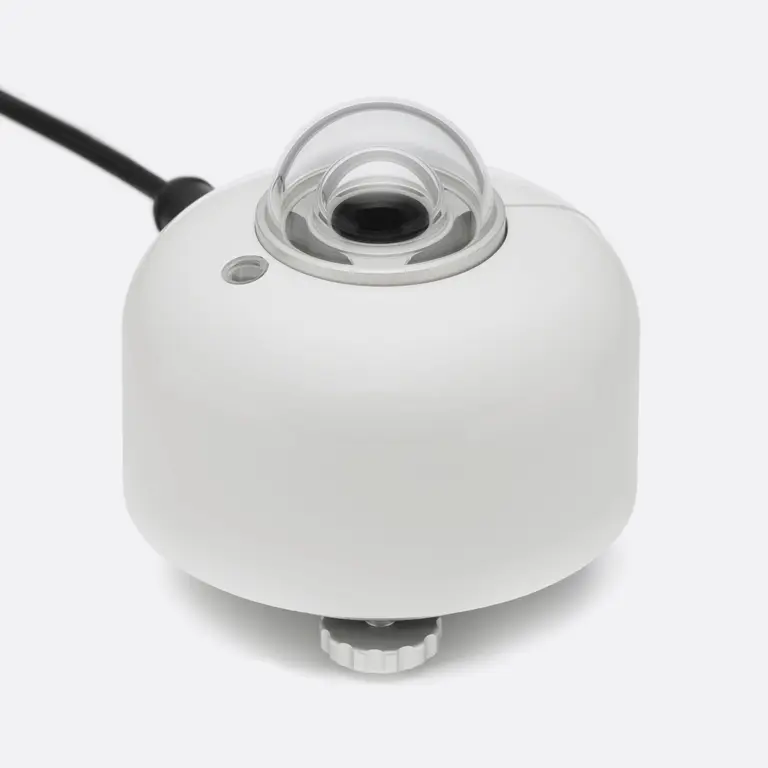
Class A pyranometer with heating and tilt sensor
Request a quote
Ask your question
- spectrally flat Class A
- remote diagnostics
- heating & ventilation
- tilt sensor
Digital Class A pyranometer with heating and tilt sensor
The SR30-M2-D1 has set the standard for accurate solar radiation measurement. Now, Hukx raises the bar with the new SR300-D1 industrial-grade pyranometer. Designed with several novel features essential for reliable solar radiation measurement, the SR300-D1 offers an easy upgrade path for existing SR30-M2-D1 users. Thanks to its Modbus compatibility layer, it can be installed with backward compatibility, making the transition simple and efficient. Scroll down to read more.
View the industrial-grade successor of this instrument now!
- spectrally flat Class A
- remote diagnostics
- heating & ventilation
- tilt sensor
Specifications
| measurand | hemispherical solar radiation |
| ISO 9060:2018 classification | spectrally flat Class A |
| compliance | IEC 61724-1:2021 Class A system |
| ISO 9060:1990 | secondary standard pyranometer |
| application | National Meteorological Networks, PV monitoring commercial and utility scale, meteorology / climatology, other |
| heater | with RVH Recirculating Ventilation and Heating |
| output | Modbus RS-485 |
| WMO performance level | high quality pyranometer |
All specifications
| measurand | hemispherical solar radiation |
| ISO 9060:2018 classification | spectrally flat Class A |
| compliance | IEC 61724-1:2021 Class A system |
| ISO 9060:1990 | secondary standard pyranometer |
| application | National Meteorological Networks, PV monitoring commercial and utility scale, meteorology / climatology, other |
| heater | with RVH Recirculating Ventilation and Heating |
| output | Modbus RS-485 |
| WMO performance level | high quality pyranometer |
| calibration uncertainty | < 1.2 % (k = 2) |
| measurand | sensor tilt angle |
| tilt measurement uncertainty | ± 1 ° (0 to 90 ° tilt, -30 to + 50 °C) |
| internal ventilation | yes |
| heating | yes |
| tilt sensor | yes |
| technology employed | Recirculating Ventilation and Heating (RVH™) |
| power consumption | < 3 W at 12 VDC |
| zero offset a | < 2 W/m² |
| calibration traceability | to WRR |
| calibration registers | accessible to users |
| spectral range | (285 to 3000) x 10⁻⁹ m |
| rated operating temperature range | -40 to +80 °C |
| temperature response | <± 0.4 % (-30 to +50 °C) |

Interested in this product?
Let's talk about your project and the performance data you need. We are here to guide you to the right solution.
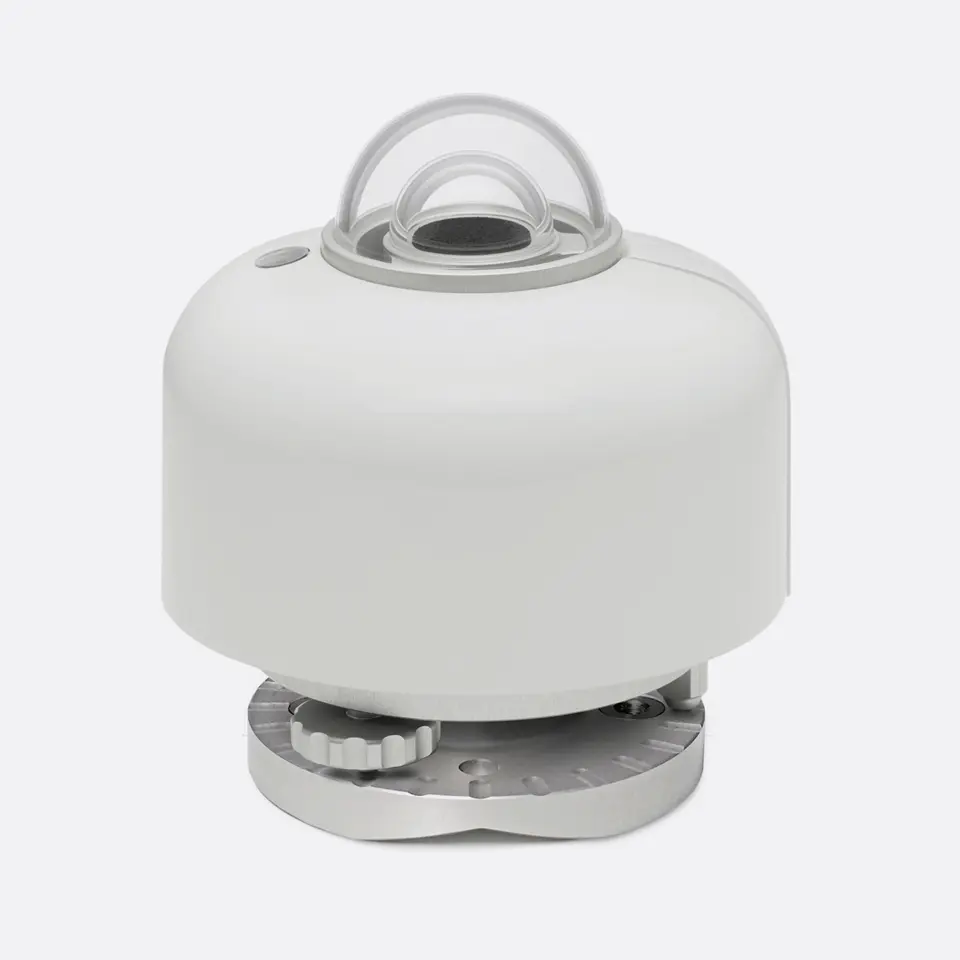
Heated for high data availability,
featuring RVH™ technology
High data availability is attained by heating of the outer dome using ventilation between the inner and outer dome. RVH™- Recirculating Ventilation and Heating - technology, developed by Hukx, suppresses dew and frost deposition and is as effective as traditional ventilation systems, without the maintenance hassle and large footprint.
The dome of SR30 pyranometer is heated by ventilating the area between the inner and outer dome. RVH™ is much more efficient than traditional ventilation, where most of the heat is carried away with the ventilation air. Recirculating ventilation is as effective in suppressing dew and frost deposition at less than 3 W as traditional ventilation is at 10 W. RVH™ technology also leads to a reduction of zero offsets.
Compliant with IEC 61724-1:2021 Class A
SR30 is the first pyranometer compliant in its standard configuration with the IEC 61724-1:2021 Class A requirements. SR30 complies, without the need for additional accessories, with IEC requirements. It includes heating for dew and frost mitigation. The instrument has 2 heating modes; normal at < 3 W, and medium at < 0.65 W power.
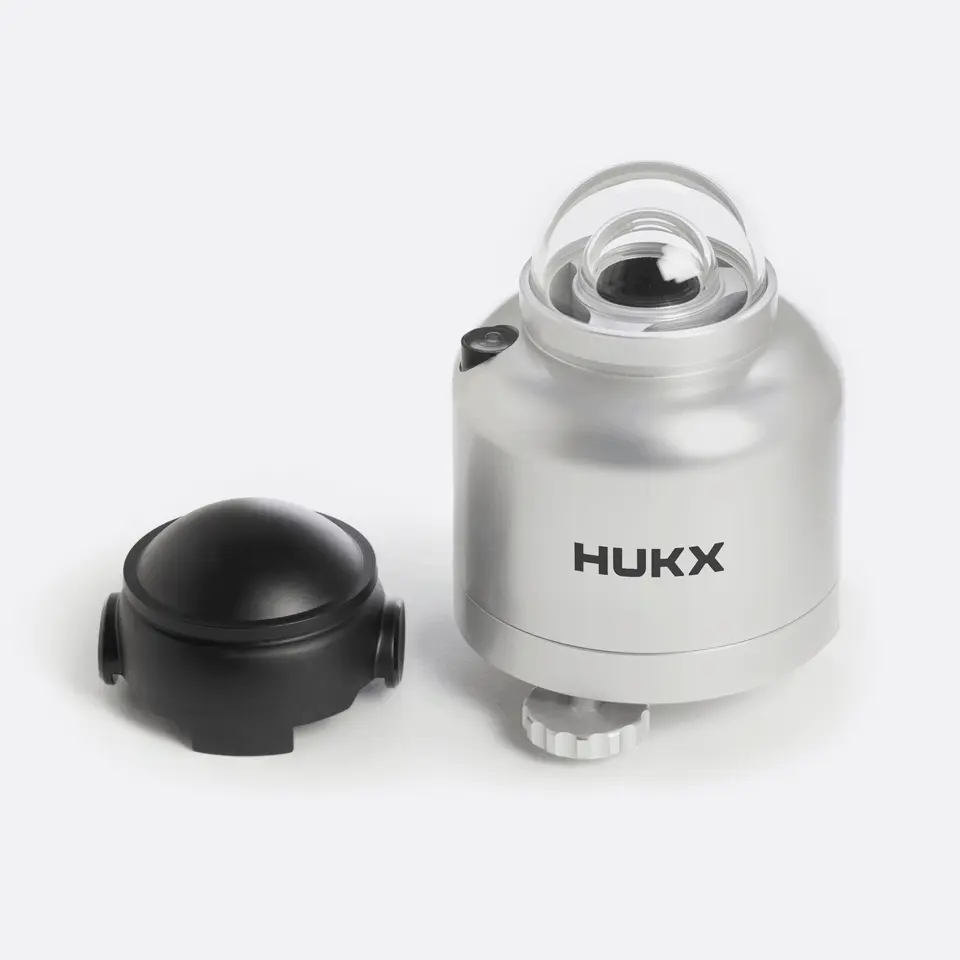
Remote sensor diagnostics
In addition to solar irradiance, SR30 outputs sensor diagnostics such as:
- tilt angle
- internal ventilator speed (RPM)
- internal humidity
- heater current
Remote diagnostics permits real-time status monitoring, reducing the need for (un)scheduled field inspections.
Tilt angle measurement included
SR30 includes a tilt sensor. This is very practical for remote checks of instrument condition or to monitor PV systems with solar trackers. The sensor measures with high accuracy, within ± 1 °, and is tested and temperature compensated between -30 and + 50 °C. SR30-M2-D1 offers improved electronics over its predecessor SR30-D1.
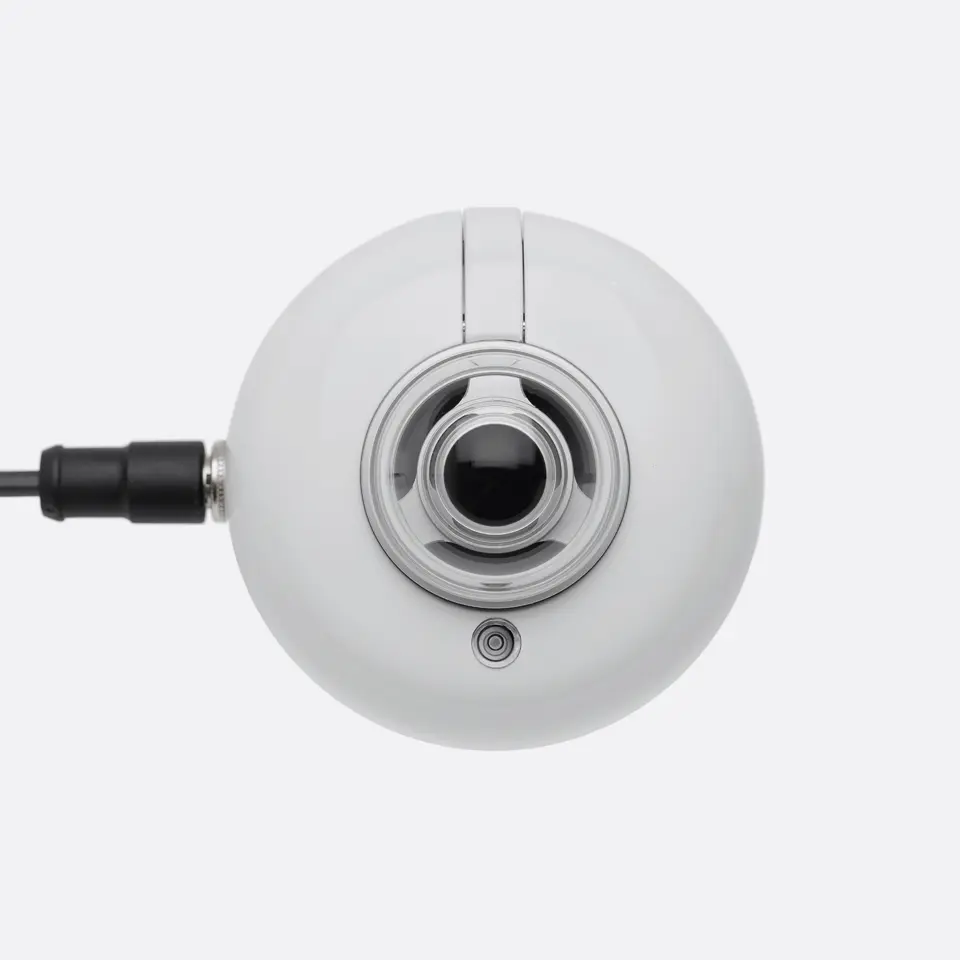
Spectrally flat as required for meteorology and PV monitoring
The new ISO 9060:2018 version defines pyranometer classes A, B and C. The standard also adds a new subclass, called "spectrally flat". The vast majority of users needs to use instruments of the spectrally flat subclass; only spectrally flat instruments measure with high accuracy, also when a cloud obscures the sun, or when the irradiance includes reflected radiation. These situations occur for example when you measure Global Horizontal irradiance (GHI) under partly or fully cloudy skies, when you measure Plane of Array (POA), albedo or net-radiation. Normal instruments, just of class A, B or C, and not spectrally flat, only measure accurately under clear sunny skies.
New Sensor Manager software
The Hukx Sensor Manager software provides a user interface for communication between a PC and digital Hukx pyranometers and pyrheliometers with a Modbus interface. The software allows the user to locate, configure and test one or more sensors and to perform simple measurements using a PC. The Sensor Manager software can be downloaded: https://hukx.com/sg/downloads. The new v2021 version of the Sensor Manager replaces previous versions such as v1817 and v1920 beta. Always use the latest version of the software. Need support in using the v2021 software? Please consult the separate Sensor Manager user manual.
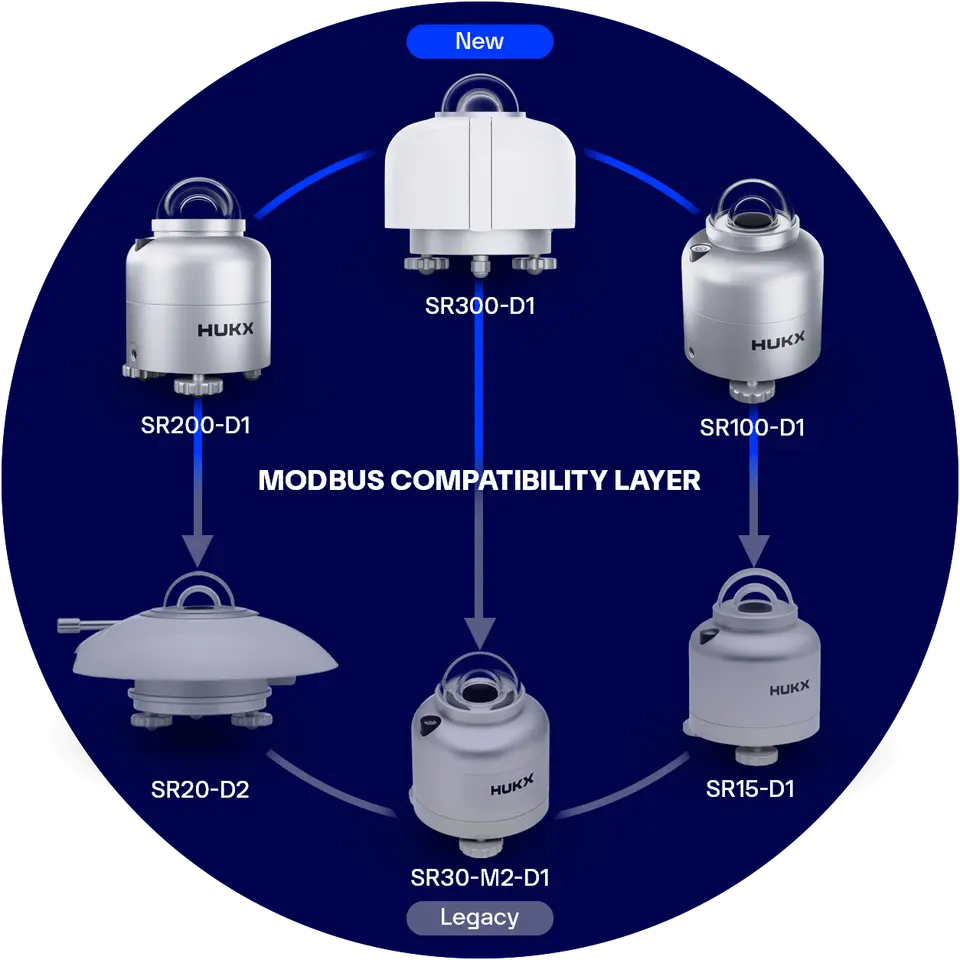
Modbus compatibility layer:
compatible with SR30-M2-D1, SR20-D2, and SR15-D1
Upgrading from a SR30-M2-D1, SR20-D2, or SR15-D1 to our latest models SR300-D1, SR200-D1, and SR100-D1? New instruments can now emulate all commonly used legacy Modbus registers for a drop-in replacement experience. Less commonly used registers may not be available. Read our note for more information: Legacy register map compatibility layer for industrial-grade instruments.
Accessories
All accessoriesFrequently Asked Questions
Or talk to us
How does a pyranometer work?
A pyranometer measures the solar radiation received by a plane surface from a 180 ° field of view angle. This quantity, expressed in W/m², is called “hemispherical” solar radiation. The solar radiation spectrum extends roughly from 285 to 3000 x 10⁻⁹ m. By definition a pyranometer should cover that spectral range with a spectral selectivity that is as “flat” as possible.
In an irradiance measurement by definition the response to “beam” radiation varies with the cosine of the angle of incidence; i.e. it should have full response when the solar radiation hits the sensor perpendicularly (normal to the surface, sun at zenith, 0 ° angle of incidence), zero response when the sun is at the horizon (90 ° angle of incidence, 90 ° zenith angle), and 50 % of full response at 60 ° angle of incidence. A pyranometer should have a so-called “directional response” (older documents mention “cosine response”) that is as close as possible to the ideal cosine characteristic.
In order to attain the proper directional and spectral characteristics, a pyranometer's main components are:
- a thermal sensor with black coating. It has a flat spectrum covering the 200 to 50 000 x 10⁻⁹ m range, and has a near-perfect directional response. The coating absorbs all solar radiation and, at the moment of absorption, converts it to heat. The heat flows through the sensor to the sensor body. The thermopile sensor generates a voltage output signal that is proportional to the solar irradiance.
- a glass dome. This dome limits the spectral range from 285 to 3000 x 10⁻⁹ m (cutting off the part above 3000 x 10⁻⁹ m), while preserving the 180 ° field of view angle. Another function of the dome is that it shields the thermopile sensor from the environment (convection, rain).
- a second (inner) glass dome: For secondary standard and first class pyranometers, two domes are used, and not one single dome. This construction provides an additional "radiation shield", resulting in a better thermal equilibrium between the sensor and inner dome, compared to using a single dome. The effect of having a second dome is a strong reduction of instrument offsets.
- a heater: in order to reduce the effect of dew deposition and frost on the outer dome surface, most advanced pyranometers have a built-in heater. The heater is coupled to the sensor body. Heating a pyranometer can generate additional irradiance offset signals, therefore it is recommended to activate the heater only during night-time. Combining a heater with external ventilation makes these heating offsets very low.
Why use a pyranometer?
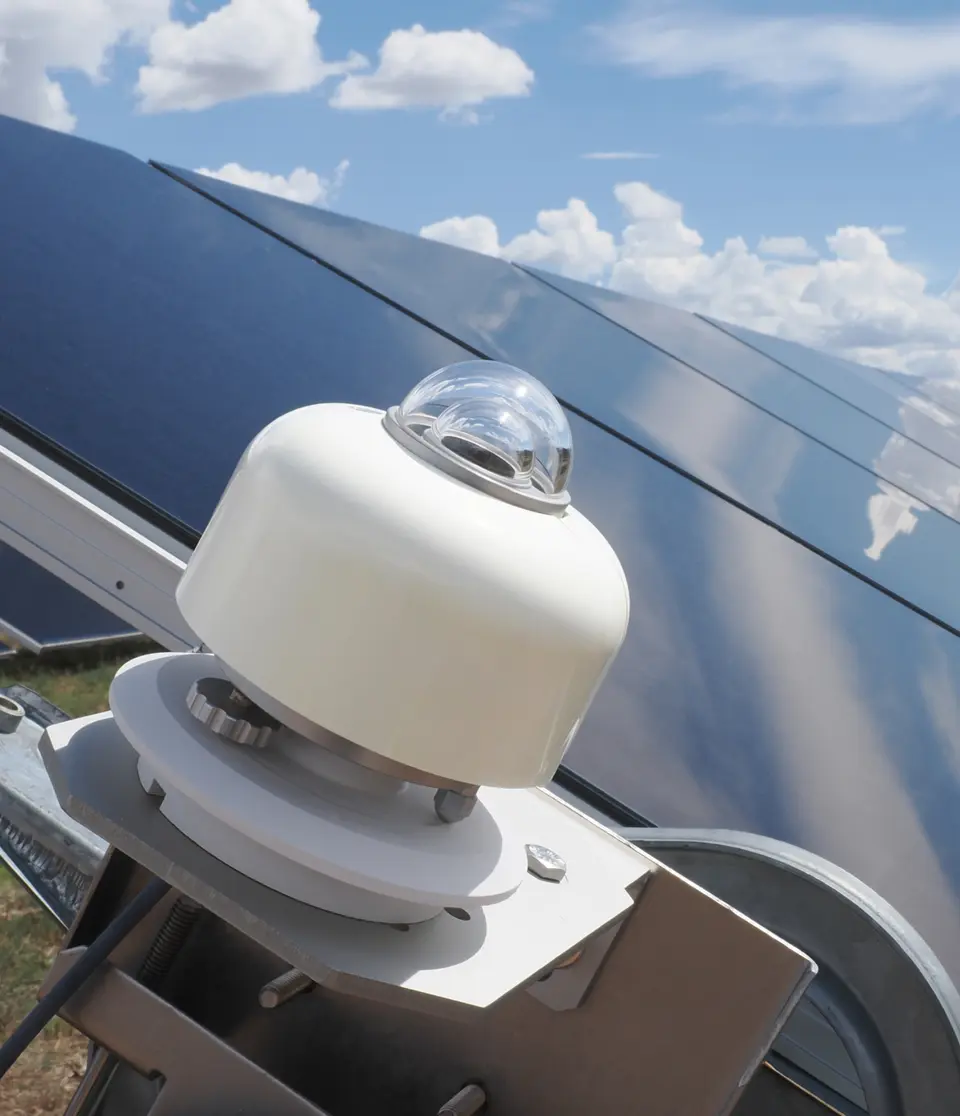
There are good reasons why pyranometers are the standard for solar radiation measurement in outdoor PV system performance monitoring.
The purpose of outdoor PV testing is to compare the available resource to system output and thus to determine efficiency. The efficiency estimate serves as an indication of overall performance and stability. It also serves as a reference for remote diagnostics and need for servicing.
The irradiance measurement for outdoor PV performance monitoring is usually carried out with pyranometers. Some standards suggest using PV reference cells. Reference cells are (with some minor exceptions) unsuitable for proof in bankability and in proof of PV system efficiency. Pyranometers are and will remain the standard for outdoor solar energy monitoring.
From a fundamental point of view:
- Pyranometers measure truly available solar irradiance (so the amount of available resource). This is the parameter you need to have for a true efficiency calculation.
- Reference cells measure only that part of solar radiation that can be used by cells of identical material and identical packaging (flat window), so the yield of a certain PV cell type. This is not a measurement that can be used in an efficiency calculation and in fact leads to several percentage points error in efficiency estimates.
The International Energy Agency (IEA) and ASTM standards for PV monitoring recommend pyranometers for outdoor PV monitoring. PV reference cells do not meet IEC 61724-1 class A requirements for irradiance measurement uncertainty: their directional response makes them systematically overestimate daily radiant exposure in J/m2 (or W·hr/m2 ) by more than 2 %, larger on hourly basis.
How do I choose a pyranometer?
Choosing the right pyranometer for your application is not an easy task. We can offer assistance. But first, you should ask yourself the following questions:
- are there standards for my application?
- what level of accuracy do I need?
- what will be the instrument maintenance level?
- what are the interfacing possibilities?
When discussing with Hukx, our recommendation for the best suited pyranometer will be based on:
- recommended pyranometer class
- recommended maintenance level
- estimate of the measurement accuracy
- recommended calibration policy
- recommended interface
Pyranometers can be manufactured to different specifications and with different levels of verification and characterization during production. The ISO 9060-1990 standard, “Solar energy—specification and classification of instruments for measuring hemispherical solar and direct solar radiation”, distinguishes between 3 classes; secondary standard (highest accuracy), first class (second highest accuracy) and second class (third highest accuracy). From second class to first class and from first class to secondary standard, the achievable accuracy improves by a factor 2.
The ISO 9060-1990 standard is up for revision. The new 2018 version of the standard will be slightly different from the 1990 version. The new version of ISO 9060 includes three instrument accuracy classes A, B and C, and a special extension of every class “Spectrally Flat”, which is recommended for Plane of Array (POA), albedo, and reflected solar measurements.
Our pyranometer selection guide offers practical guidelines for choosing a pyranometer. The application of pyranometers in PV system performance monitoring according to IEC 61724-1 is highlighted as an example. Sensors specific for diffuse radiation and meteorological networks are also addressed in this selection guide.
What is the difference between a pyrheliometer and a pyranometer?
A pyranometer measures hemispherical solar radiation. When measuring in the horizontal plane this is called Global Horizontal Irradiance (GHI). When measuring in “plane of array”, next to PV panels, this is called Plane Of Array (POA) irradiance.
A pyrheliometer is used to measure Direct Normal Irradiance (DNI). DNI is defined as the solar radiant flux collected by a plane unit surface normal to the axis pointing towards the center of the sun, within an optical angular aperture. DNI is composed of the solar irradiance within the extent of the solar disk (half-angle 0.266 ° ± 1.7 %) plus some circumsolar radiation.
How to measure solar radiation?
So you want to measure solar radiation? You are not alone. People have been measuring the energy coming from the sun for centuries, and today more people are measuring solar radiation than ever before.
As with any measurement, start by asking yourself what it is that you want to measure. The term ‘solar radiation’ is used in many different applications, with slightly different meanings.
Solar radiation is often defined as the energy reaching the earth from the sun. A large part of this is visible sunlight, but the solar spectrum extends into the UV as well as the near infra-red. It reaches us in different ways: directly from the sun (direct solar radiation), through scattering through the atmosphere (diffuse solar radiation) or via reflections. These quantities can be measured separately, but most of the times people are interested in the total radiation on the surface: the global horizontal irradiance (GHI). In solar monitoring of PV power plants, both the global horizontal irradiance as well as the irradiance in the plane of your panels is required. This is called tilted solar radiation, or ‘plane of array (POA)’ irradiance. In energy balance studies, multiple pyranometers are combined to measure both the incoming and reflected solar radiation. This can be combined with separate measurements of net longwave radiation and other fluxes.
We have publicized a note walking you through the solar radiation measurement process, from choosing an instrument to getting your data in. We discuss site selection, instrument mounting and datalogger setup. To ensure your solar radiation data remains reliable for years, we also cover quality control and maintenance. Read the note.
What is the warranty for Hukx pyranometers?
The product warranty is 5 years for pyranometers, pyrgeometers, albedometers, net radiometers and pyrheliometers.
Hukx has the following warranty and liability policy: Hukx guarantees the supplied goods to be new, free from defects and free from faults that are clearly related to production and manufacturing. Factory warranty (granting free of charge repair) for defects that are clearly traceable to errors in production is 5 years. Delivery of goods is subject to Hukx General Conditions of Sale.
Areas of application

Related products