Hukx pyranometers in corrosive, salty and marine environments
Hukx pyranometers are used all over the globe. Although not
formally specified for corrosive salty or marine environments, they
are successfully employed there. This note highlights:
- what we did in instrument design to avoid corrosion problems,
and - about the successful employment of pyranometers in a salt
marsh
Introduction
Hukx pyranometers are used worldwide in all climates. Formal “rated operating conditions” do not include exceptional conditions such as polluted air, heavy hail, and sandstorms. Environments with a salty atmosphere are also excluded. However, in reality, our instruments are operated in such environments—at the user’s own risk. Hukx takes all possible measures to guarantee a long lifetime, even when working beyond rated conditions.
To protect against corrosion caused by salt, we did the following:
- Choice of materials: we work with high-grade (EN AW 6082) aluminum with an extra anodising layer. Corrosion protection is excellent.
- Testing: Pyranometers pass testing according to SAE J2334: Cyclic Corrosion Test – commonly called salt spray test - is used to characterise the corrosive performance of a design.
- Choice of materials: Hukx work with plastic IP67 connectors, injection moulded around the cable, with stainless steel threading.
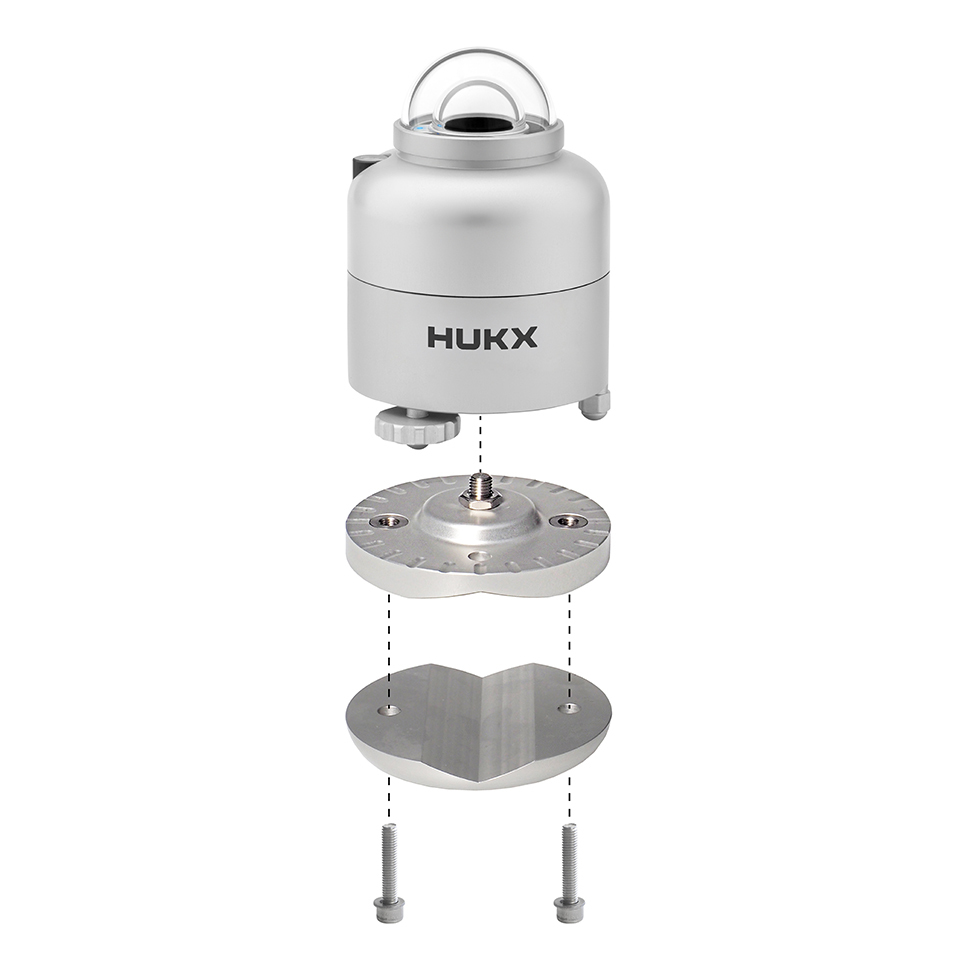
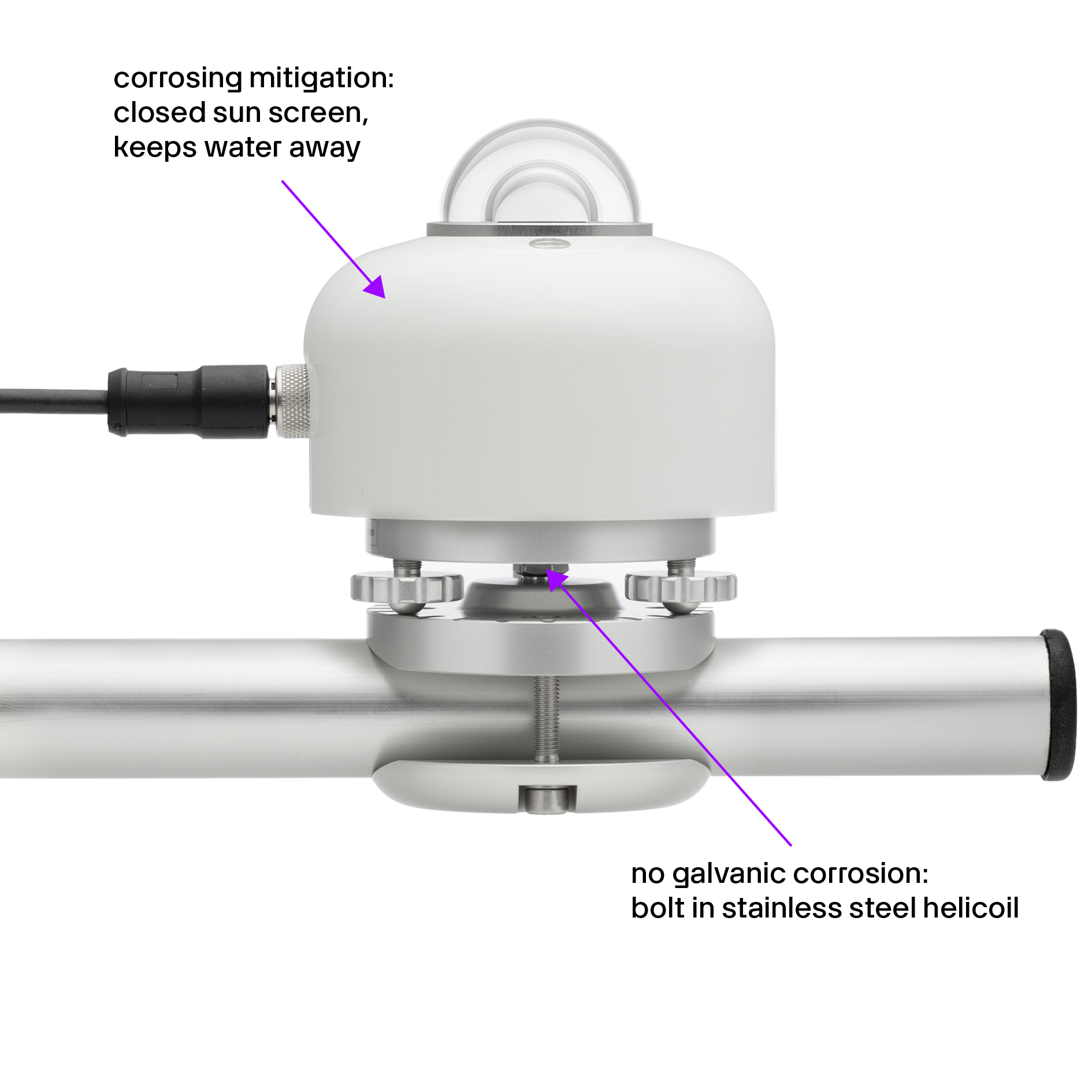
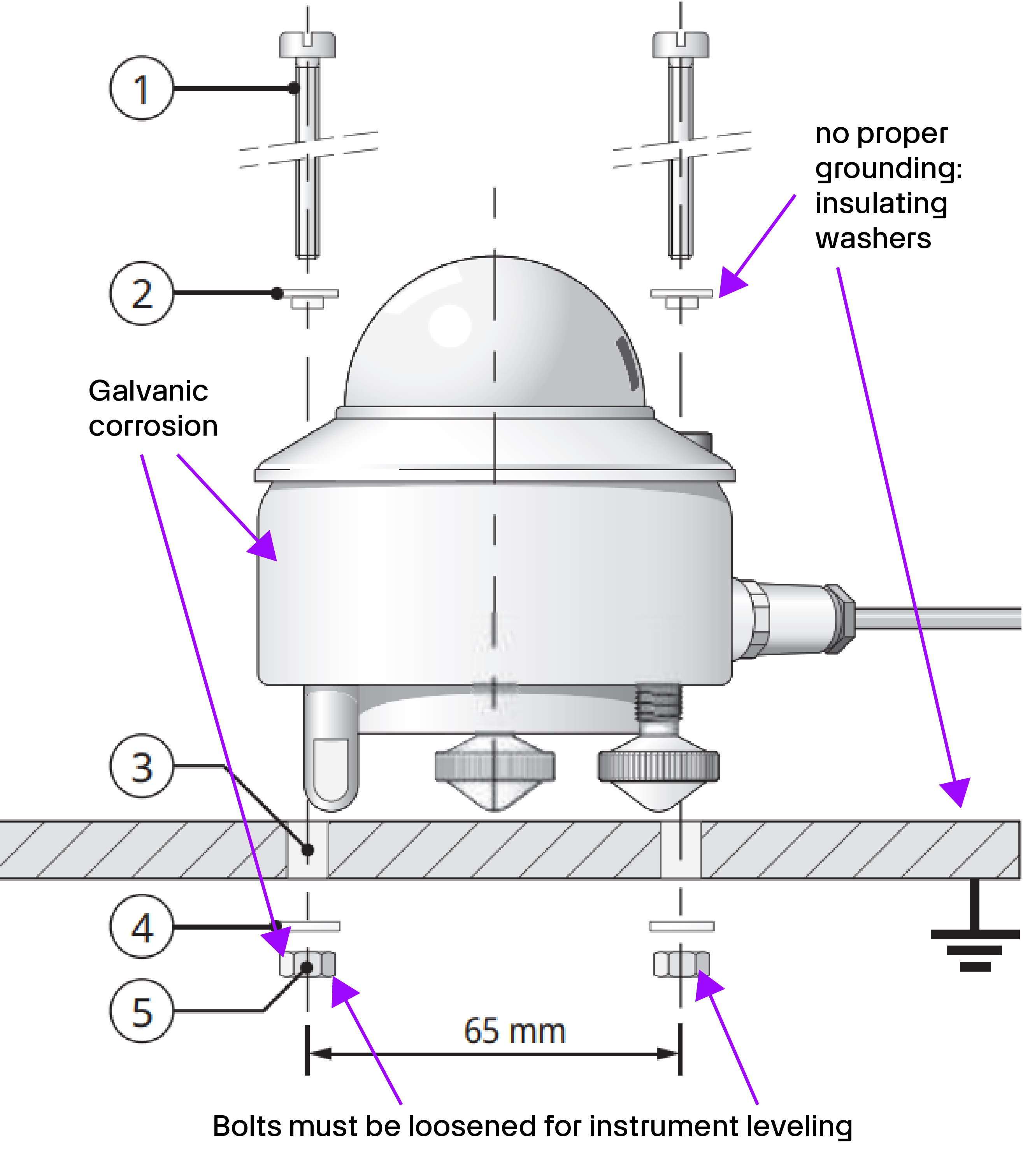
- Instrument design: you can mount our pyranometers using one bolt at the bottom minimising exposure to salt and water. The thread in the instrument bottom employs a stainless steel (A2) helicoil minimising galvanic corrosion: Competing designs often use
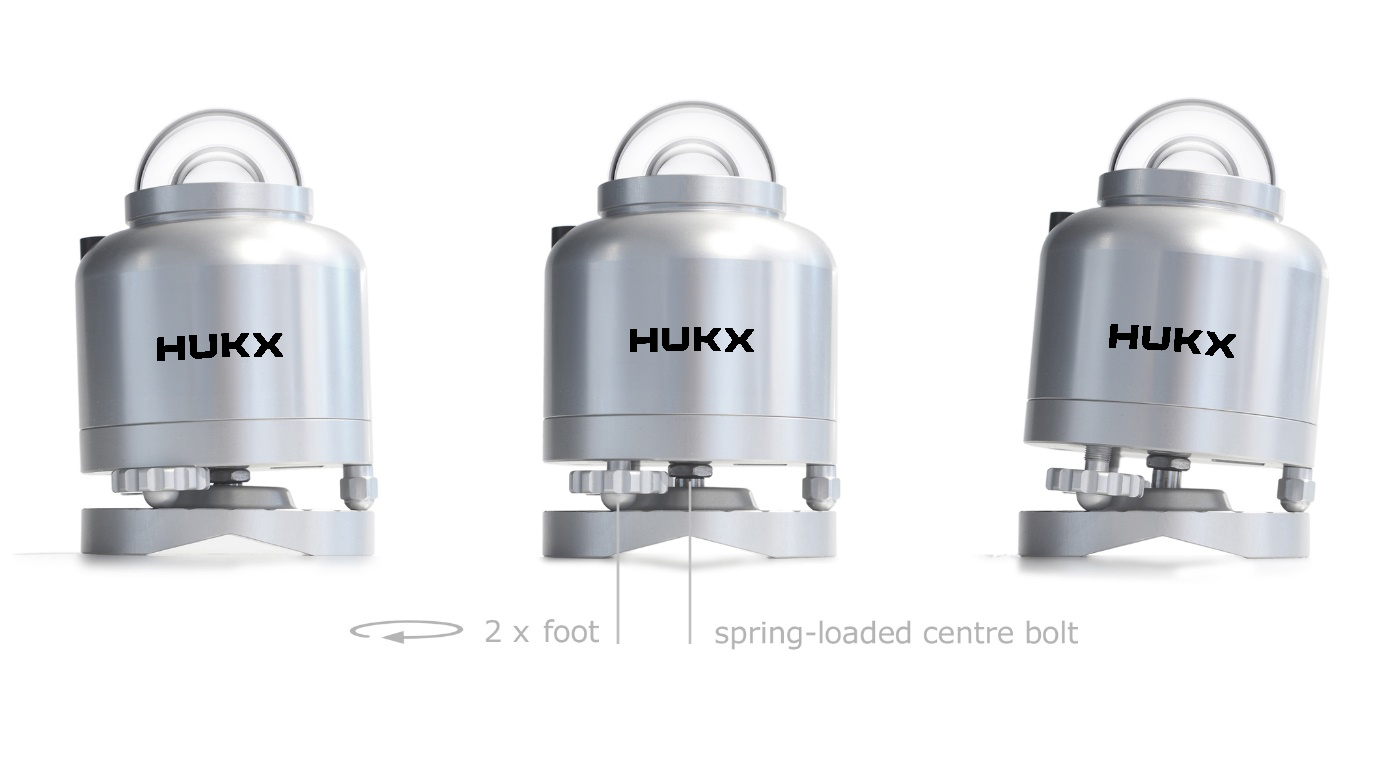
stainless steel bolts passing through the aluminum instrument body. Such 2-metal connection is sensitive to galvanic corrosion. - Instrument design: spring-loaded leveling: adjustment is possible without touching or turning the connection bolts.
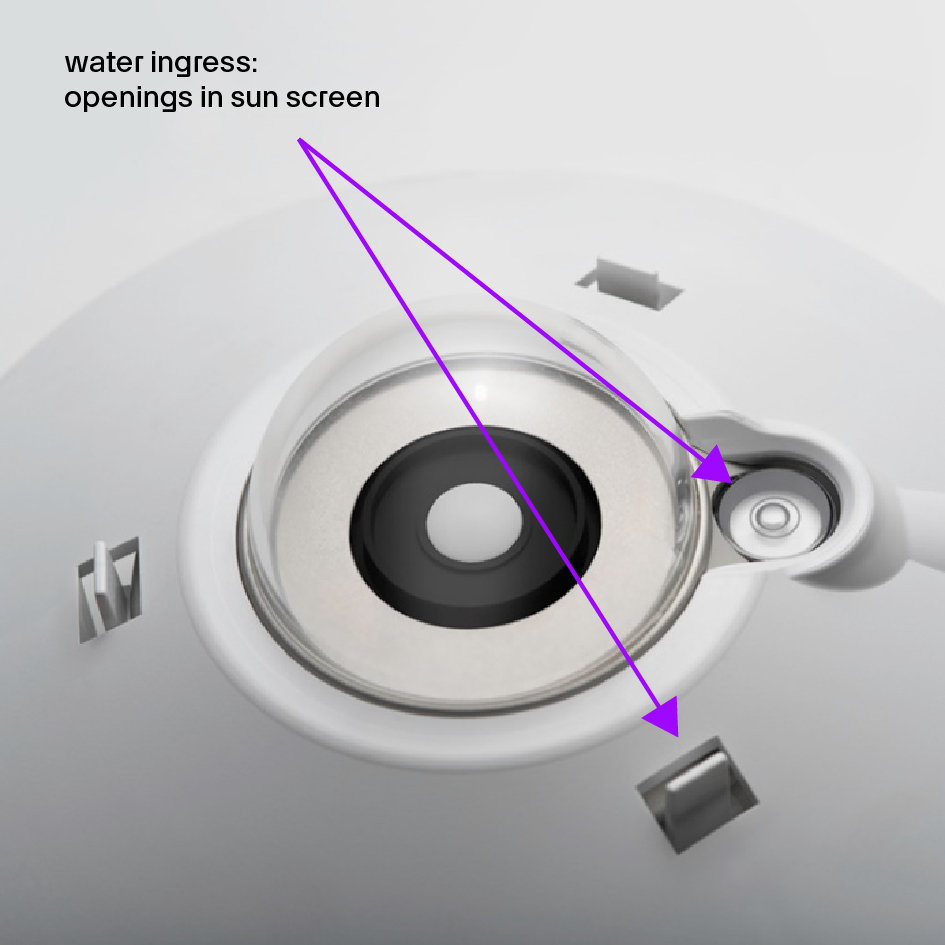
- Instrument design: closed sun screen, limiting the passage of rainwater and salt spray. Competing designs often have semi-open screens, which allow water to contact the instrument body.
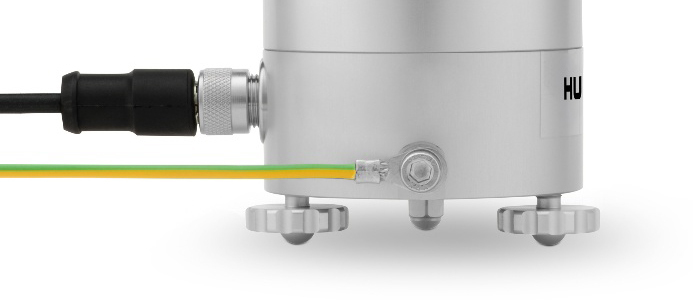
- Separate earthing terminal: the bolts connecting the pyranometer to the mounting structure are sensitive to corrosion and are not suitable for grounding the sensor. Hukx sensors have separate ground lugs so that you can make the required stable and reliable low-electrical-resistance connection of the instrument body to the ground.
What not to do
The designers of the instrument in figures 5 and 6 gave corrosion protection and instrument grounding a low priority.
Example application in a salty environment: Khavda Solar Park
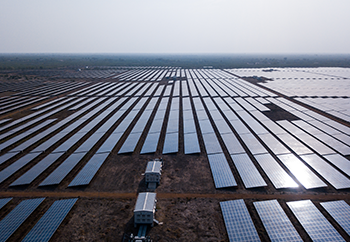
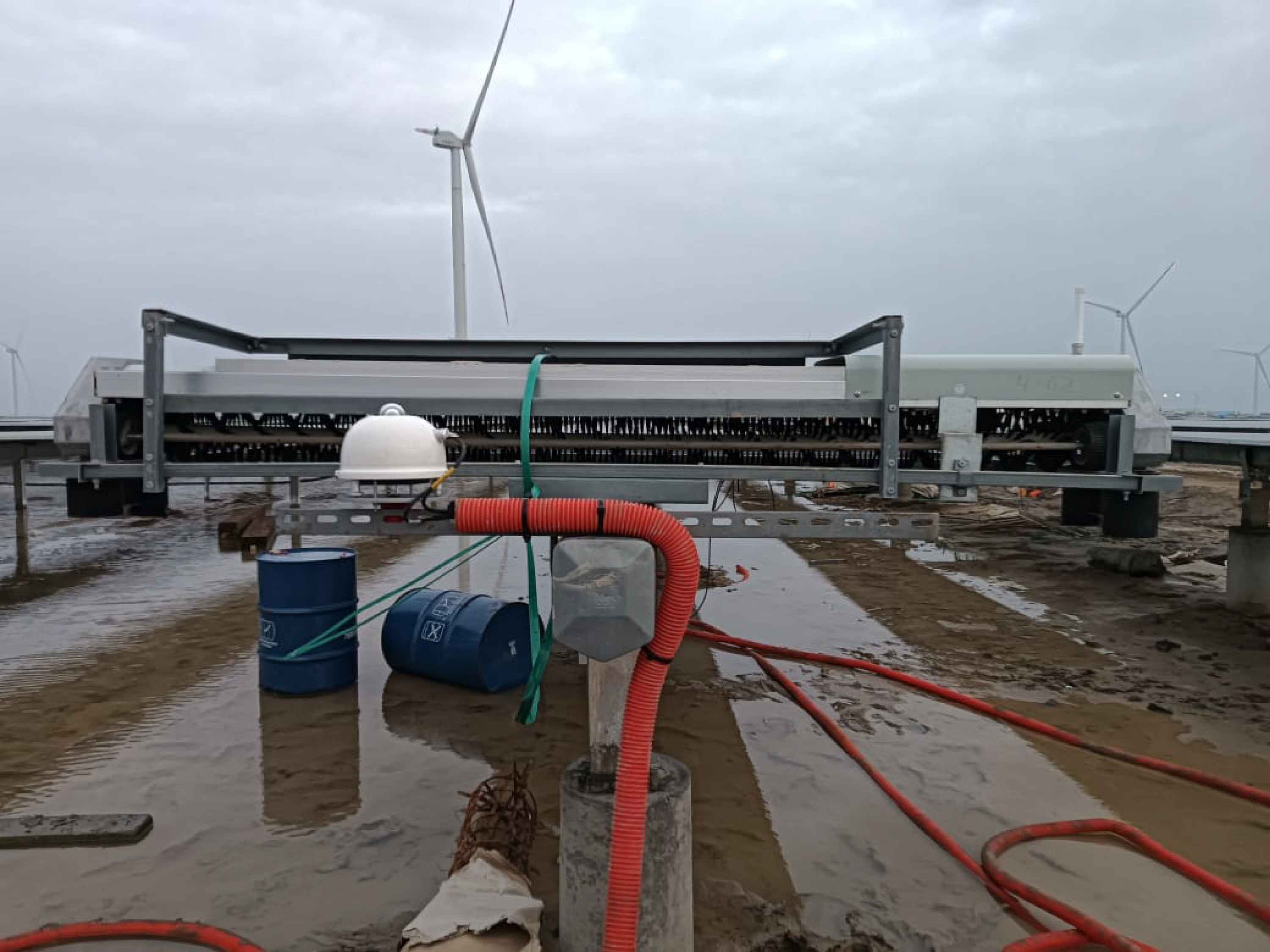
The Gujarat Hybrid Renewable Energy Park is one of the largest energy parks in the world. The Khavda PV power plant is part of this park, located in the salt pans of the Great Rann of Kutch in India. The vast salt pans and salt marshes surrounding the site lead to high salinity in the air. Conditions are similar to the highly corrosive conditions near the sea. Successful deployment of more than 400 Hukx sensors (the installed capacity is almost 5 GW) in this environment shows that they are suitable for coastal areas.
Related products
More application notes
All application notes


We like having a good technical conversation
Do you have questions, need help finding the right solution, or looking to discuss an instrument for a unique application? Our technical engineers provide expert advise. Contact us now!