Selecting a heat flux sensor; what not to do
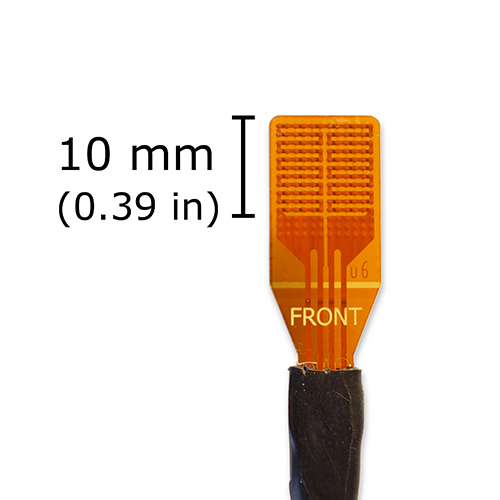
Too small for many applications
Average out: use multiple sensors, do not use sensors that are too small.
Heat fluxes tend to be spatially variable. One spot is often not representative of the whole area that must be analyzed. Use multiple sensors and compare. Use sensors larger than 10 x 10 mm
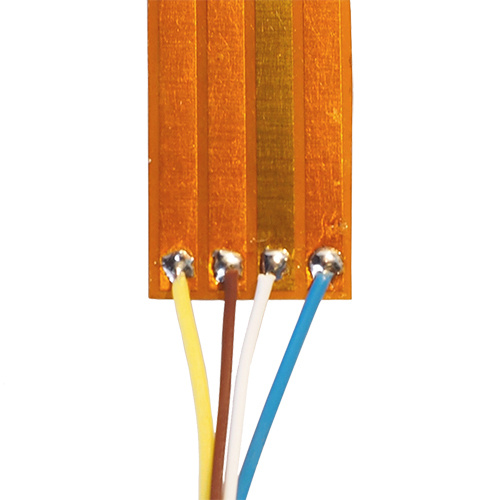
Vulnerable wiring, no strain relief
Choose the right strain relief: avoid out-of spec connection of signal wires.
The thin copper traces of flex circuits and PCBs are vulnerable. Even when provided with solder pads these are not rated for any serious dynamic strain. If there is any risk of strain on the wiring, ensure that your sensorto-signal-wire connection is sturdy and provides strain relief for the sensor. Invest in good wiring.
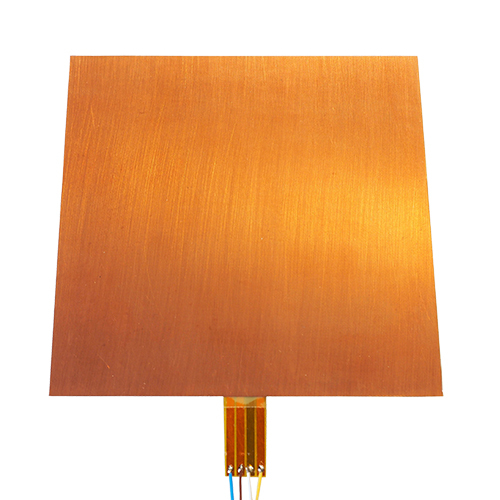
If you see the thermopile pattern, this is a bad sensor: high thermal conductivity dependence
Watch out for micro effects: use sensors with thermal spreaders.
A thermal spreader, i.e. a conductive layer covering the sensor, helps reduce the thermal conductivity dependence of the measurement. Be careful when using sensors without thermal spreaders. Read our note on why use spreaders.

No thermal guard
Watch out for edge effects: do not use a thermal spreader extending across the entire sensor. Although the use of thermal spreaders often is a good idea, for general heat flux measurement it is better to have a passive guard area. Guards reduce sensitivity to edge effects, and can also be used for sensor mounting without disturbing the sensitive area.
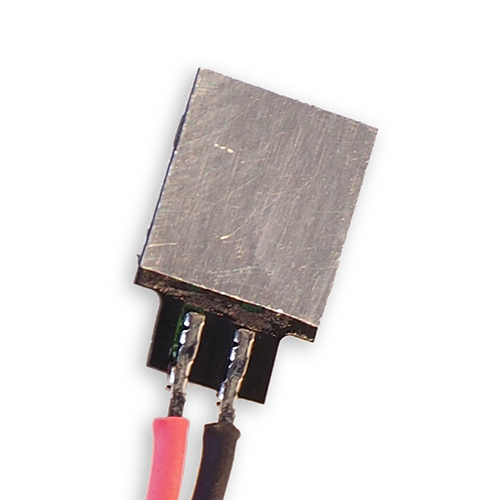
Unstable, air-filled cavities in the sensor and unprotected corrosive spreaders
Watch out for corrosion; choose the right IP environmental protection class.
Many sensors have:
- – wire connections with open contact to the environment
- – unprotected (copper) thermal spreaders and also
- – some designs use air cavities inside the sensor.
They may fill up with water, and promote internal corrosion. Read our review on sensor technology.
In case these come in contact with moisture, this is a large potential source of damage , as well as a starting point for corrosion and sensor instability.
Signal wires in contact with housing
Invest in signal quality and electrical safety: signal wires must be electrically insulated from the sensor housing .
Signal wires should be electrically insulated. This guarantees electrical immunity. Sensors having wire connections with open contact to the environment are high-risk in terms of measurement error (zero offsets caused by ground loops) as well as potential safety issue. In industrial environments this often is not allowed.




We like having a good technical conversation
Do you have questions, need help finding the right solution, or looking to discuss an instrument for a unique application? Our technical engineers provide expert advise. Contact us now!