What is a diffusometer?
A quick introduction to diffusometer basics
This article provides readers with a basic technical background an introduction to diffusometers and the measurement of diffuse solar irradiance.
Introduction
Part of the extra-terrestrial solar radiation penetrates the atmosphere and directly reaches the earth’s surface, while another part of it is scattered and/or absorbed by the gas molecules, aerosol particles, cloud droplets and cloud crystals in the atmosphere. The former is the direct component, the latter is the diffuse component of the incoming solar radiation.
A diffusometer is a device that measures the diffuse component of the solar radiation. Irradiance is measured in watts per square meter (W/m2).
Diffusometers are traditionally used for climatological research and meteorological monitoring. Separating direct and diffuse radiation leads to more accurate measurements, and also makes it possible to perform more detailed modelling, which is useful not only in meteorology but also in studies of performance of buildings and solar powered energy generation. In particular, the demand for higher accuracy Photovoltaic - PV - system performance modelling has led to a greater interest in diffuse measurement.
In this article, we will explore the basics:
- What does a diffusometer measure?
- Why is it useful?
- And how does it work?
Diffusometer: a solar irradiance sensor
Diffusometers measure diffuse solar irradiance. In contrast, the direct solar radiation, or Direct Normal Irradiance, DNI, is the direct component which comes directly from the sun. See Figure 1.
In most cases, a diffusometer is installed horizontally to measure the Diffuse Horizontal Irradiance (DHI). As defined by the IEC (International Electro-technical Commission), a diffusometer measuring DHI is “an instrument that blocks or corrects for direct irradiance contributions.”
This Direct Normal Irradiance DNI together with Diffuse Horizontal Irradiance DHI, gives the total amount of solar energy available on earth’s surface. The Global Horizontal Irradiance, GHI, is then expressed as:
GHI = DNI ∙ cos(θ) + DHI
where θ is the angle between the surface normal and the position of the sun in the sky, also called the solar zenith angle.
The DHI may vary depending on geographical location, time of day, and meteorological and environmental conditions. For example, cloud coverage, precipitation, and air quality can affect diffuse solar irradiance.
Typical values for DHI range from 50 to 150 W/m2 under clear sky conditions, during which most of the GHI originates from the DNI contributions. However, on overcast days, it can significantly exceed these values. This is due to clouds that may block and scatter parts of the solar radiation. If the clouds completely block the sun, then GHI equals DHI. Furthermore, highly reflective surfaces above the horizon of the instrument such as nearby buildings and snow-covered slopes, may lead to higher local DHI values.

What are diffusometers used for?
The sun is earth’s main source of incoming energy. Solar climate is a main factor in our lives. At any location it is a main contributor to the local climate, outdoor human thermal comfort, the way a buildings are constructed. Solar radiation may also be a source of energy to harvest.
In the solar energy industry, diffusometers are used for 2 main purposes:
- to accurately assess the local climate and potential yield of a PV plant at a future site.
- to monitor and assess the performance of PV power plants.
The separate measurement of diffuse irradiance is relevant because the PV modules react differently to direct and diffuse radiation, because their spectral composition is not the same. The relevance of separating diffuse is even higher when bifacial solar modules are used. A bifacial PV module is able to absorb solar radiation from both sides of the modules. Diffuse irradiance incident on the rear side of the bifacial PV panel originates from two main sources: downwelling diffuse radiation coming from the sky and upwelling reflected solar radiation coming from the ground surface. Due to this complex nature and the non-uniformity of the ground surface beneath the modules, it is a difficult task to model the rear-side irradiance contributions.
The IEC:61724-1 standard suggests the measurement of diffuse irradiance may be used in combination with an optical model to estimate the rear-side irradiance.
How does a diffusometer work?
Diffusometers may operate on different working principles. Traditionally, diffusometers consisted of a pyranometer that is continually shaded from the direct irradiance. The following options all satisfy the description of diffusometer prescribed by the IEC:67124-1 standard:
- pyranometers with a shadowring
- rotating shadow band pyranometers
- photodiode arrays with shadow pattern
- solar trackers with a pyranometer shaded by a shading-disk
Pyranometers with a shadow ring
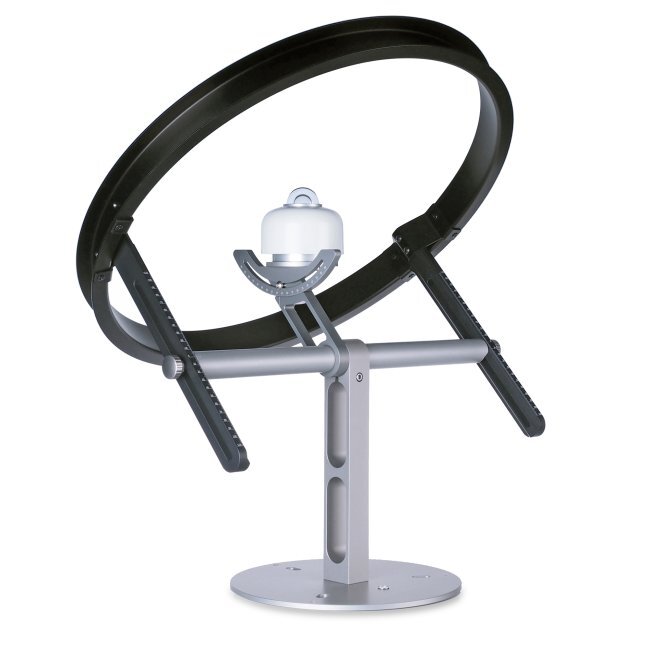
For example, the Hukx SHR02 shadow ring may be used in combination with a pyranometer to form a diffusometer (see Figure 2). The shadow ring must be aligned north-south, its tilt angle must be based on the latitude, and it must be adjusted every 3 - 4 days to the seasonal change of the elevation of the sun. Although this setup introduces operational costs, it delivers high accuracy against relatively low acquisition costs.
Rotating shadow band
Another option is to use a rotating shadow band pyranometer to measure the direct and global irradiance, respectively. As the shadow band rotates, the pyranometer beneath it will be temporarily shadowed, allowing for GHI and DHI measurements. Additionally, by using the solar zenith angle, it also allows for DNI calculations.
Unlike the shadow ring, this solution requires minimal maintenance, limited to regularly cleaning the pyranometer dome. However, some drawbacks of this solution include the high acquisition costs, the use of moving parts, the complicated data analysis and the hard-to-quantify accuracy.
Sensor arrays with shading pattern
A simpler approach is to use a sensor array that is partially shaded at any time of the day. The sensor that is shaded, which corresponds to the lowest response, measures the DHI.
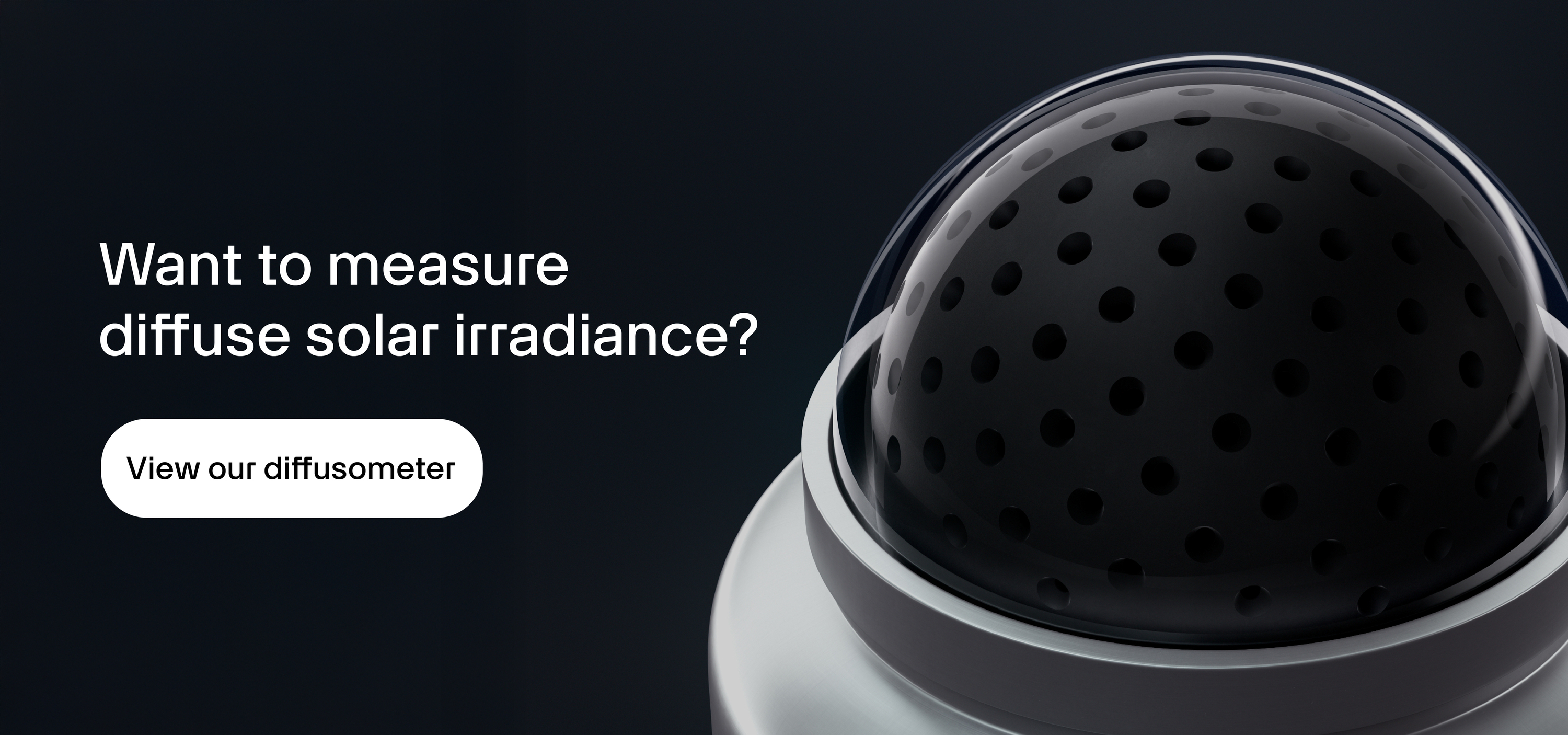
For example, the Hukx SRD100 diffusometer (Figure 3) consists of nine photodiode sensors placed beneath a shadow mask with a unique Fibonacci lattice hole pattern. This shadow mask ensures that at least one of the photodiodes is fully shaded. Consequently, this method allows measurement of DHI without any moving parts.

Tracker with shading-disk
To measure solar irradiance with the highest accuracy possible, two pyranometers and one pyrheliometer are mounted on a solar tracker. One pyranometer is shaded with a disk (or ball) so that it measures the DHI. The other pyranometer measures GHI, while the pyrheliometer measures DNI. By measuring all three components of solar irradiance, users may crosscheck using the above equation for GHI.
Although this is the most accurate method available, using a solar tracker introduces substantial acquisition and O&M costs. Pyrheliometers require daily inspection and cleaning.
Spectrally flat
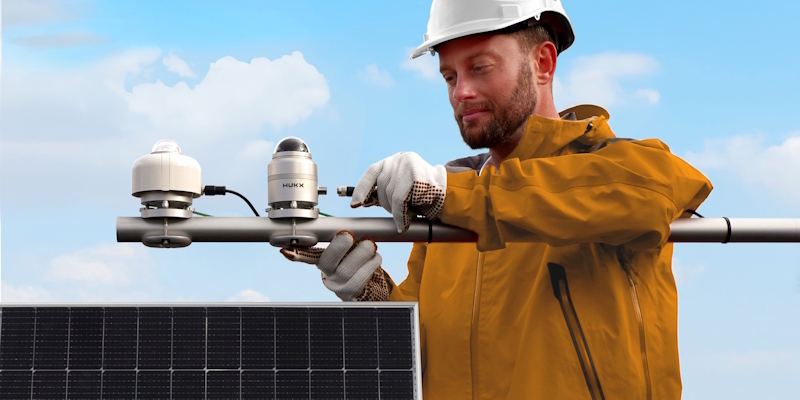
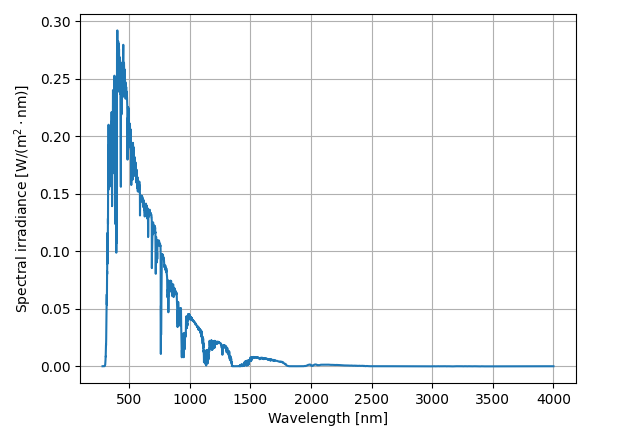
The spectral composition of diffuse irradiance is highly variable. For example, spectrally the diffuse irradiance of a clear blue sky differs a lot from the irradiance of a grey cloudy sky. For accurate DHI measurements, a spectrally flat pyranometer, like the SR300-D1, is preferred.
When using a “spectrally flat” pyranometer for diffuse horizontal measurements, the same calibration as that for global horizontal irradiance measurements is used. For non-spectrally flat pyranometers an individual uncertainty evaluation is possible, and calibration must specify the solar spectrum for which this calibration is valid.
Selection of a diffusometer
Performing reliable diffusometer measurements in the field involves many practical aspects, depending on the options listed previously. These factors are listed below in Table 1 for each diffuse solar irradiance measurement option.
Table 1: Advantages and disadvantages of various solutions for diffuse solar irradiance measurement.
| DIFFUSOMETER | |||
|---|---|---|---|
| model | SRD100 (most convenient) | SHR02 shadow ring (middel way) | solar tracker (highest accuracy) |
| accuracy | basic | medium | high |
| maintenance cost | low | high | high |
| acquisition cost | low | medium | high |
| setup size | small | medium | large |
Literature
- C. Deline, S. Ovaitt, M. Gostein, J. Braid, J. Newmiller and I. Suez, (2024): Irradiance Monitoring for Bifacial PV Systems’ Performance and Capacity Testing
- IEC (2021): IEC 61724-1:2021 Photovoltaic system performance - Part 1: Monitoring
- ISO (2018): ISO 9060:2018 Solar energy — Specification and classification of instruments for measuring hemispherical solar and direct solar radiation
- ISO (2021): ISO/TR 9901:2021 Solar energy — Pyranometers — Recommended practice for use
Related products
More application notes
All application notes


We like having a good technical conversation
Do you have questions, need help finding the right solution, or looking to discuss an instrument for a unique application? Our technical engineers provide expert advise. Contact us now!