HFP01SC
Self-calibrating heat flux sensor™
Request a quote
Ask your question
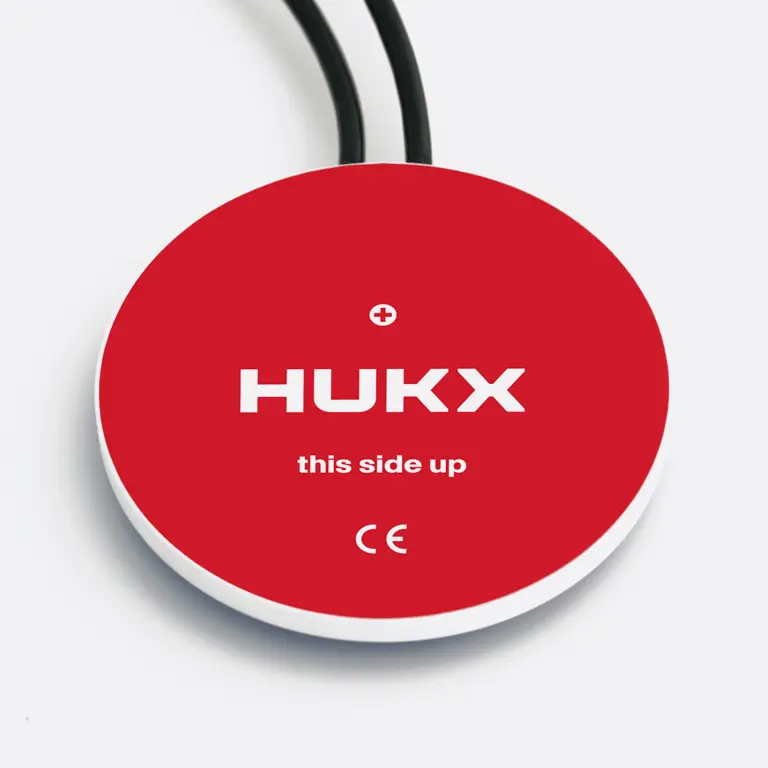
- long term use
- self-calibrating
- robust & stable
- IP67 rated
Self-calibrating heat flux sensor
HFP01SC self-calibrating heat flux sensor is a heat flux sensor for use in the soil. It offers the best available accuracy and quality assurance of the measurement. The on-line self-test verifies the stable performance and good thermal contact of sensors that are buried and cannot be visually inspected and taken to the laboratory for recalibration. The self-test also includes self-calibration which compensates for measurement errors caused by the thermal conductivity of the surrounding soil (which varies with soil moisture content), for sensor non-stability and for temperature dependence.
- long term use
- self-calibrating
- robust & stable
- IP67 rated
Specifications
| measurement range | -2000 to 2000 W/m² |
| rated operating temperature range | -30 to +70 °C |
| on-line functionality testing | self-test including self-calibration |
| measurand | heat flux |
| sensing area | 8 x 10⁻⁴ m³ |
| sensitivity (nominal) | 60 x 10⁻⁶ V/(W/m²) |
| sensor thermal resistance | 81 x 10⁻⁴ K/(W/m²) |
| IP protection class | IP67 |
All specifications
| measurand | heat flux |
| on-line functionality testing | self-test including self-calibration |
| sensing area | 8 x 10⁻⁴ m³ |
| sensor thermal resistance | 81 x 10⁻⁴ K/(W/m²) |
| measurement range | -2000 to 2000 W/m² |
| sensitivity (nominal) | 60 x 10⁻⁶ V/(W/m²) |
| rated operating temperature range | -30 to +70 °C |
| IP protection class | IP67 |
| film heater resistance | 100 Ω ± 10 % |
| film heater rated power supply | 9 to 15 VDC |
| interval between self-tests 6 hr heating interval duration | 180 s |
| power consumption daily average | 0.02 W |
| standard cable length | 2 x 5 m |
| options | |
| – longer cable length (10, 15, 20, 30, 40 m) | |

Interested in this product?
Let's talk about your project and the performance data you need. We are here to guide you to the right solution.
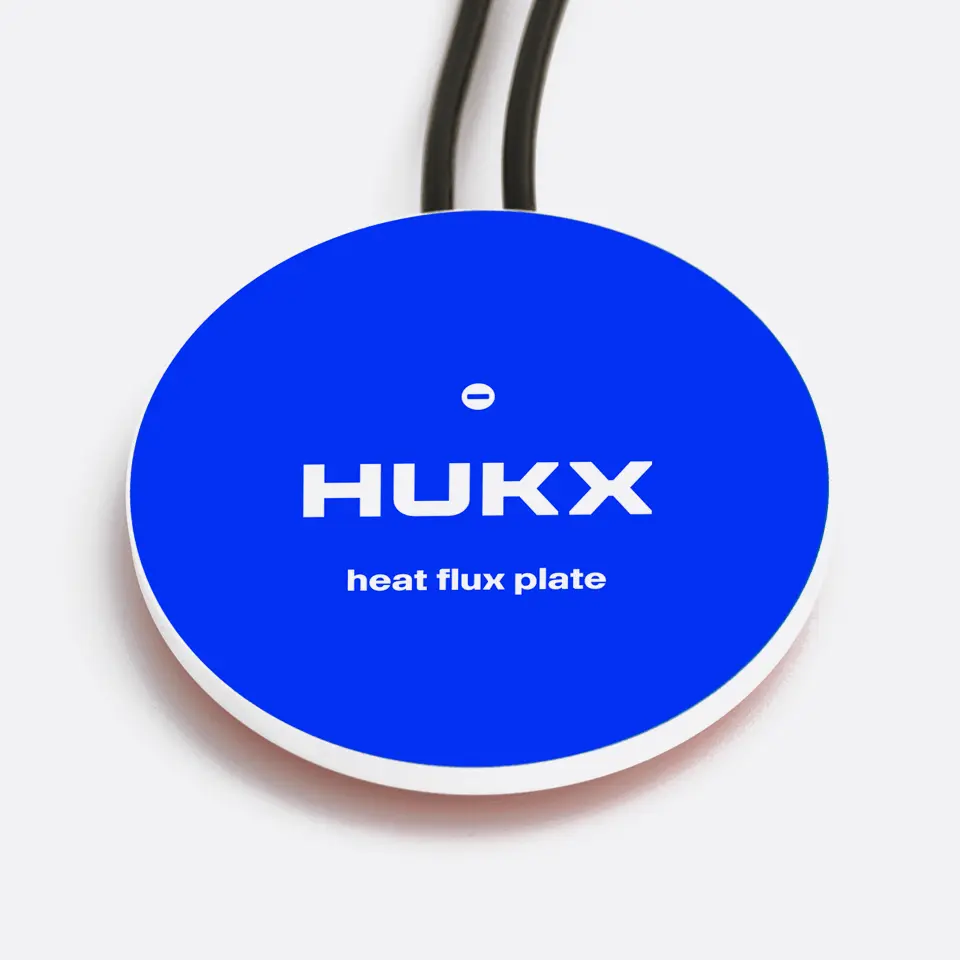
Unmatched accuracy & quality assurance
HFP01SC measures soil heat flux in W/m2. It is used when the highest level of quality assurance and a high measurement accuracy are required. In essence, HFP01SC is a combination of a heat flux sensor and a film heater. The heat flux sensor output is a voltage signal that is proportional heat flux through the sensor. At a regular interval the film heater is activated to perform a self-test (see Figure 4). The self-test results in a verification of sensor contact to the soil and in a new sensitivity that is valid for the circumstances at that moment. The latter is called self-calibration. Implicitly also cable connection, data acquisition and data processing are tested. The result is a much improved accuracy & quality assurance of the measurement relative to measurements with conventional sensors such as model HFP01.
Soil heat flux sensors are preferably left in the soil for as long as possible, so that the soil properties become representative of the local conditions. Using self-testing, the user no longer needs to take sensors to the laboratory to verify their stable performance. A typical measurement location is equipped with 2 or more sensors for good spatial averaging.
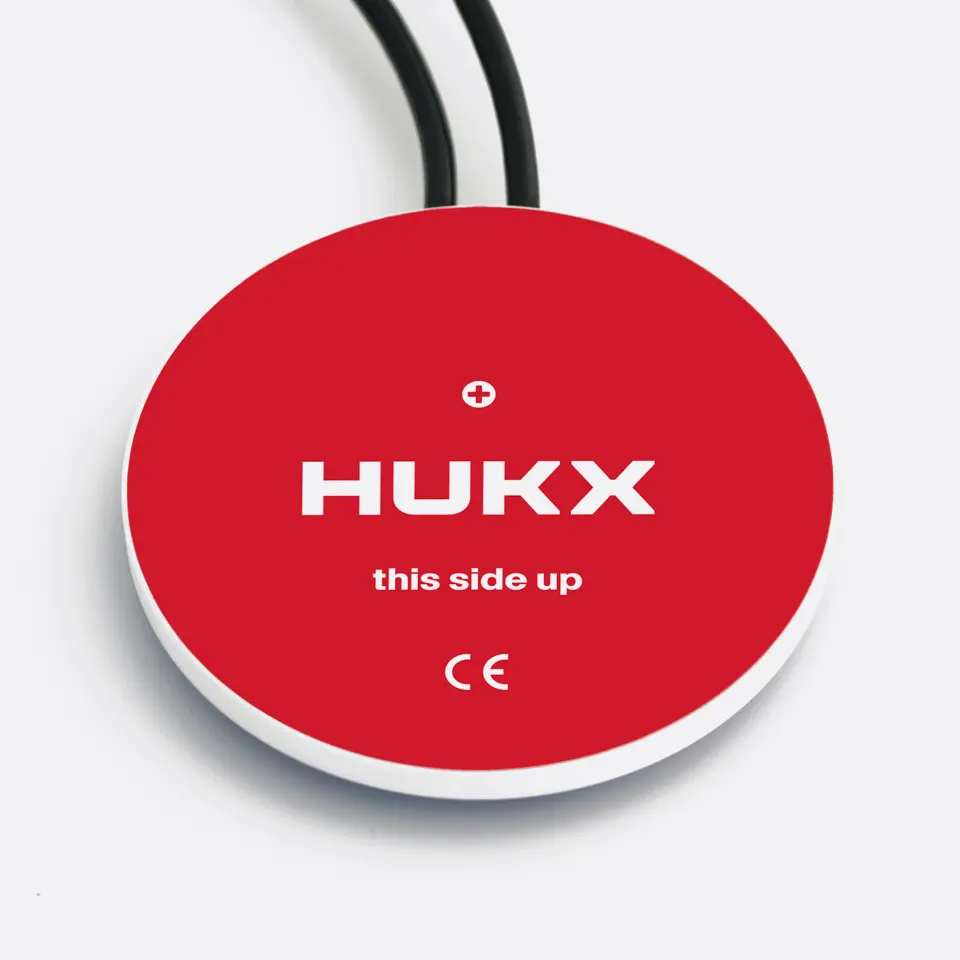
Unique features and benefits
- low thermal resistance
- large guard area (required by the ISO 9869 standard)
- low electrical resistance (low pickup of electrical noise)
- high sensitivity (good signal to noise ratio in low-flux environments)
- robustness, including a strong cable (essential for permanently installed sensors)
- IP protection class: IP67 (essential for outdoor application)
- incorporated film heater for self-testing
Suggested use
- high-accuracy scientific measurement of soil heat flux, with a high level of data quality assurance
Accessories
Frequently Asked Questions
Or talk to us
How to measure heat flux?
Heat flux sensors measure energy flux onto or through a surface in [W/m²].
The source of the heat flux may be:
- conduction
- radiation
- convection
Convective and conductive heat transfer are associated with a temperature difference. Heat always flows from a source to a sink, from a hot to a cold environment. Convective and conductive heat flux is measured by letting this heat flow through the sensor. Radiative flux is measured using heat flux sensors with black absorbers. The absorbers converts radiative to conductive energy. Hukx started in 1993 with sensors for measurement of heat flux in soils and on walls. In the course of the years, we have added specialized sensors and systems for many other applications.
Heat flux sensors manufactured by Hukx are optimized for the demands of different applications:
- rated temperature range
- rated heat flux range
- sensitivity
- response time
- chemical resistance, safety requirements
- size, shape and spectral properties
Hukx is the world market leader in heat flux measurement. We have prepared a white paper briefly explaining the fundamentals of measuring with heat flux sensors. It also offers general directions what to watch out for and some, perhaps surprising, applications of heat flux sensors. Take a look at our white papers.
What matters most when measuring with a heat flux sensor?
- Representativeness in time and space; average!
A heat flux sensor measures at a certain location. Is this location representative of what you need to measure? If possible, use a relatively large sensor, rather than a small one, and consider use of multiple sensors. Thermal processes often have large time constants; instantaneous measurements may be misleading. Average to get the full picture. - Optical properties
When heat flux sensors also measure radiation, pay attention to the surface color. If needed paint the sensor surface. Please mind that shiny metallic surfaces reflect both infrared and visible radiation. Paints may have different colors in the visible range, but are usually “black” absorbers in the far-infra-red. - Sensor thermal resistance
A heat flux sensor distorts the local heat flux. In order to minimize this effect, use the sensor with the lowest possible thermal resistance. - Edge effects
A heat flux sensor locally distorts the heat flow pattern, in particular around the edges of the sensor. A passive guard, i.e. a non-sensitive part around the sensor is essential to avoid errors due to edge effects.
There are more characteristics that matter. Please find them in our white paper on heat flux fundamentals and applications, You may also take a look at our note on How to install a heat flux sensor for tips & tricks.
Which sensor(s) to use for surface energy flux measurement?
Hukx manufactures a range of sensors for surface energy flux measurements. All have proven reliability.
These state-of-the-art sensors are made for the global fluxnet community:
- NR01 is a market leading 4-component net radiometer.
- HFP01 and HFP01SC measure soil heat flux.
- STP01 offers an accurate temperature profile measurement.
- TP01 is the leading sensor for soil thermal conductivity.
Sensors made by Hukx are designed for compatibility with most common datalogger models. For many models we have example programs and wiring diagrams available.
How to measure R-value and U-value of buildings?
On-site measurements of thermal resistance, R, are often applied in studies of buildings. Alternatives are to measure its inverse value, the thermal conductance which is called the Λ-value, or the thermal transmittance which includes ambient air boundary layer thermal resistance, the U-value. The measurements of R are based on simultaneous time averaged measurement of heat flux Φ and differential temperature, ΔT, (using two temperature sensors on each on a different side of the wall).
R = ΔT/Φ
Hukx provides a range of sensors and measuring systems for use in measurement of the energy budget of buildings and characterization of construction materials.
HFP01 heat flux sensor and TRSYS01 measuring system are widely used for on-site measurements on walls, windows and other construction elements in building physics.
-HFP01 can be used for in-situ measurement of building envelope thermal resistance (R-value) and thermal transmittance (H-value) according to ISO 9869, ASTM C1046 and ASTM 1155 standards. HFP01 is the world’s most popular sensor for heat flux measurement in the soil as well as through walls and building envelopes. HFP01 measures heat flux through the object in which it is incorporated or on which it is mounted, in W/m². More information? Visit the HFP01 product page.
-TRSYS01 is a high-accuracy system for on-site measurement of thermal resistance, R, thermal conductance, the Λ-value, and thermal transmittance, the U-value, of building envelopes. TRSYS01 is mostly used for measurements according to standard practices of ISO 9869 and ASTM C1155 / C1046. The system is equipped with high-accuracy electronics, two heat flux sensors of model HFP01 as well as two pairs of matched thermocouples. The two measurement locations provide redundancy, leading to a high level of confidence in the measurement result. The high accuracy of the heat flux sensors and temperature difference measurements ensures that TRSYS01 continues measuring when other systems no longer perform; in particular at very low temperature differences across the wall.
Where can I find complete heat flux measuring systems?
Hukx, market leader in heat flux measurement, offers both sensors and systems.
These measuring systems typically include a Measurement and Control Unit and one or more sensors for measuring heat flux as well as other measurands, such as temperature and humidity. Examples are the TCOMSYS01 Hot Cube thermal comfort measuring system, including a TCOM01 sensor, and the TRSYS01 measuring system, incorporating two HFP01 heat flux sensors and two pairs of matched thermocouples.
'Sensors only' can be found here. Complete measuring systems are displayed here, on a separate page.
Cannot find what you are looking for? Please contact us.
Areas of application

Related products