NR01
Analog 4-component net radiometer with heating and spectrally flat Class C pyranometers
Request a quote
Ask your question

- market leading 4-component net radiometer
- spectrally flat Class C
- with internal heating for high data availability
- with analog output
4-component net radiometer
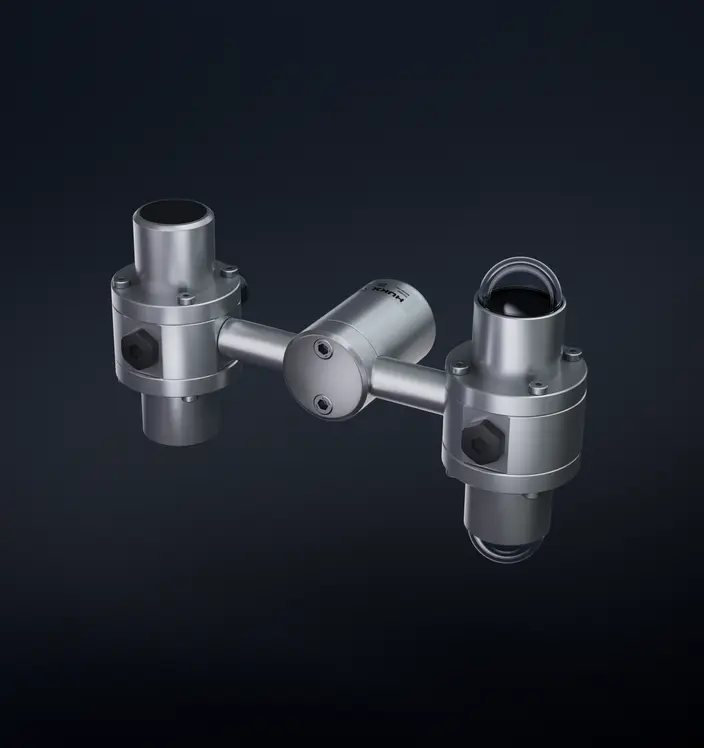
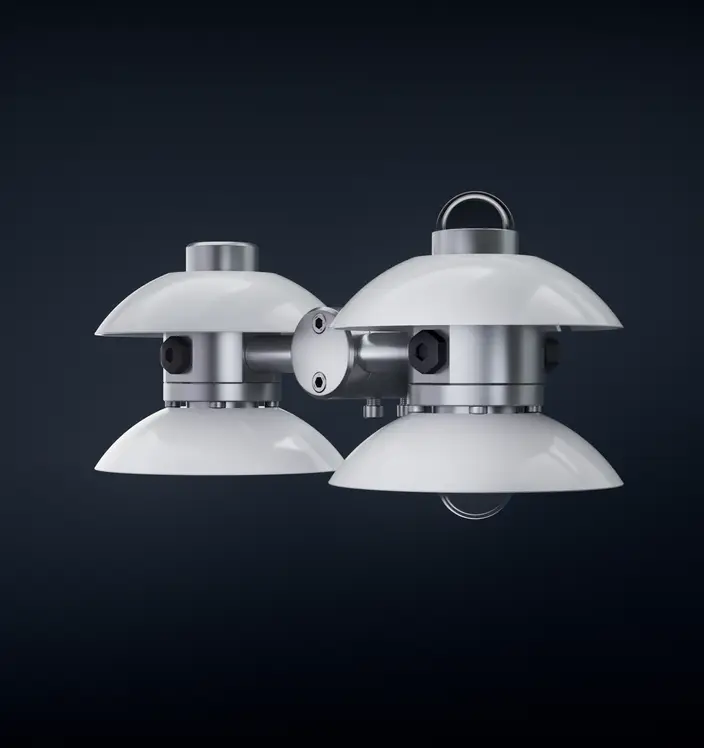
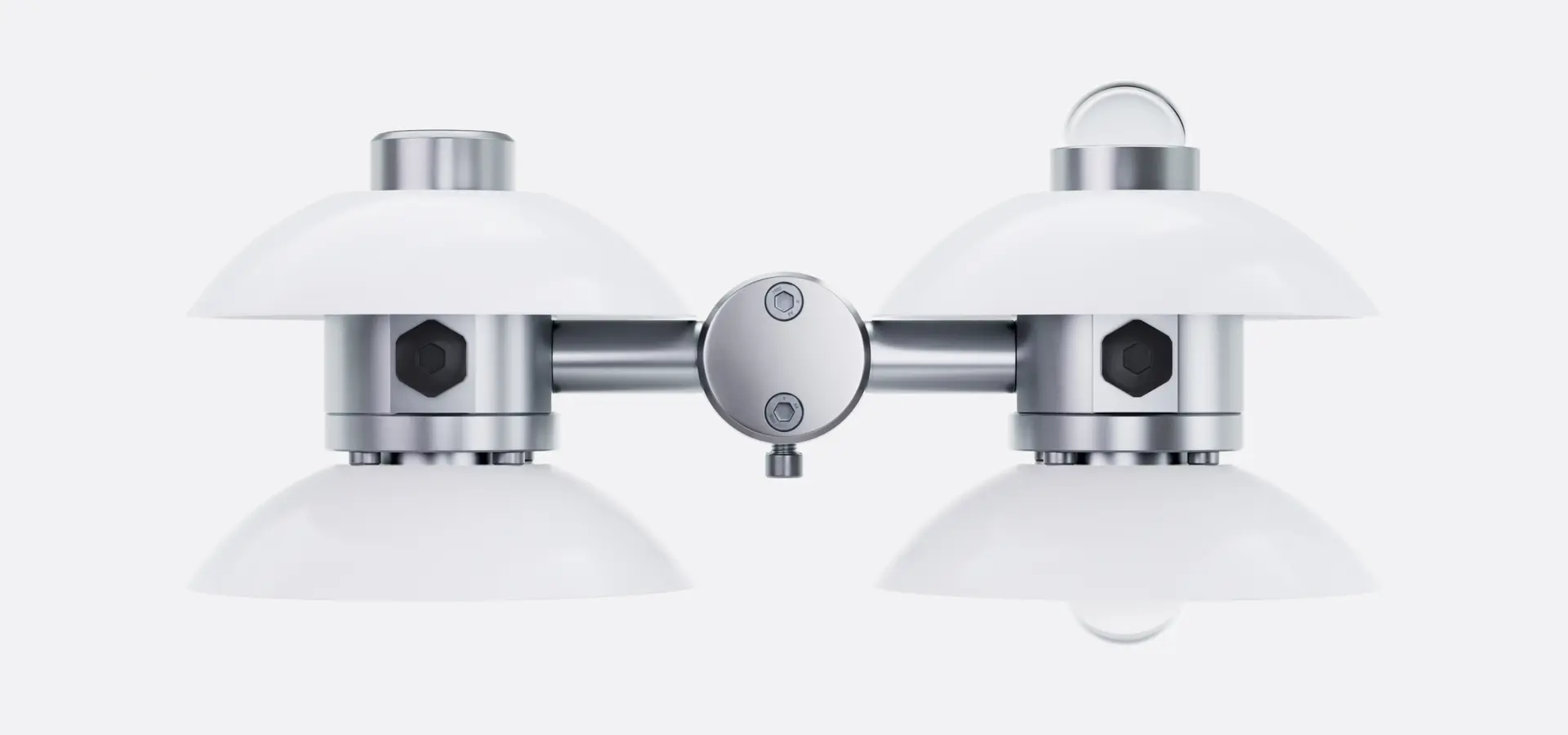
NR01 is a market leading 4-component net radiometer, mostly used in scientific-grade energy balance and surface flux studies. It offers 4 separate measurements of global and reflected solar and downwelling and upwelling longwave radiation, using 2 sensors facing up and 2 facing down. NR01 owes its popularity to its excellent price/performance ratio and major improvements relative to comparable instruments. Advantages include its modular design with 2 pairs of identical sensors, low weight, ease of levelling, and low solar offsets in the longwave measurement. The unique capability to heat the pyrgeometers reduces measurement errors caused by dew deposition.
Specifications
| measurand | net radiation (using all 4 sensors) |
| measurand | global solar radiation |
| measurand | reflected solar radiation |
| ISO 9060: 2018 classification | both pyranometers: spectrally flat Class C |
| WMO compliance | both pyranometers: WMO Class C |
| measurand | downward longwave radiation* |
| measurand | upward longwave radiation* |
| optional measurand | surface temperature* |
All specifications
| measurand | net radiation (using all 4 sensors) |
| measurand | global solar radiation |
| measurand | reflected solar radiation |
| ISO 9060: 2018 classification | both pyranometers: spectrally flat Class C |
| WMO compliance | both pyranometers: WMO Class C |
| measurand | downward longwave radiation* |
| measurand | upward longwave radiation* |
| optional measurand | surface temperature* |
| optional measurand | sky temperature* |
| optional measurand | albedo or solar reflectance |
| optional measurand | sunshine duration |
| included sensors | 2 x identical ISO 9060 spectrally flat Class C pyranometer; 2 x identical pyrgeometer with 150 ° field of view angle |
| spectral range solar | 285 to 3000 x 10⁻⁹ m |
| spectral range longwave | 4.5 to 42 x 10⁻⁶ m |
| leveling | 2-axis leveling assembly included |
| heater on pyrgeometer | 1.5 W at 12 VDC |
| temperature sensor | Pt100 |
| measurand Pt100 | instrument body temperature |
| required readout | 4 x DC voltage, 1 x Pt100 |
| mounting | on a 1-inch NPS tube; NR01 delivery includes a shim for easy alternative mounting on a ¾ inch tube (tubes not included) |
| calibration traceability solar | to WRR |
| calibration uncertainty solar | < 2.4 % |
| calibration traceability longwave | to WISG |
| calibration uncertainty longwave | < 7 % |
| rated operating temperature range | -40 to +80 °C |
| standard cable length | 2 x 5 m (see options) |
| * required measurand instrument body temperature |

Interested in this product?
Let's talk about your project and the performance data you need. We are here to guide you to the right solution.
For accurate measurements
NR01 measures the 4 separate components of the surface radiation balance: global solar radiation (downward), reflected solar radiation (upward), and downwelling and upwelling longwave radiation. The solar radiation sensors are called pyranometers and the longwave sensors are referred to as pyrgeometers.
From these 4 separate components, the net radiation is derived. To calculate sky and surface temperatures, it is necessary to compensate for irradiated heat emitted by the pyrgeometers themselves (Stefan-Boltzmann law). A Pt100 temperature sensor is included in NR01’s body for this purpose. Sunshine duration may also be estimated using the WMO-approved pyranometric method.
Atop the roof of the world
The video below shows the NR01 net radiometer installed on a weather station near the summit of Mount Everest. The data will provide scientific insight into subjects ranging from melting glaciers to changing crop cycles.
Video credit: Arbindra Khadka, Ph.D. Glaciologist, Kathmandu, Bāgmatī, Nepal
The best 4-component net radiometer on the market
Since its introduction in 2007, the NR01 4-component net radiometer has become widely used in monitoring networks. Reasons for its popularity include:
- lowest price point for top-level performance
- heated pyrgeometers for superior nighttime data availability
- “spectrally flat” pyranometers, WMO compliant, which is essential for albedo measurement
- low weight and reduced mounting costs
- modular design with 2 pairs of identical sensors
- easy leveling, servicing, and recalibration
Compliance to standards:
Spectrally flat pyranometers
To comply with WMO standards and for accurate reflected solar radiation measurement, it is essential to use spectrally flat pyranometers. Reflected solar radiation has a different spectrum than global solar radiation. NR01 has spectrally flat sensors that can measure both global and reflected solar radiation using the same instrument with the same calibration. By contrast, competing models often apply pyranometers that are not spectrally flat, and typically employ different pyranometers and pyrgeometers for the upfacing and downfacing measurements.
Applicable instrument-classification standards are ISO 9060 and WMO-No. 8 Guide to Meteorological Instruments and Methods of Observation.
Operation
Using the NR01 net radiometer is easy. It directly connects to the most commonly used data logging systems. The irradiance levels (in W/m2) are calculated by dividing the NR01 outputs, small voltages, by the sensitivities of the sensors. Longwave irradiance should be corrected using the instrument body temperature. The sensitivities of all sensors are provided on NR01’s product certificate.
NR01 benefits
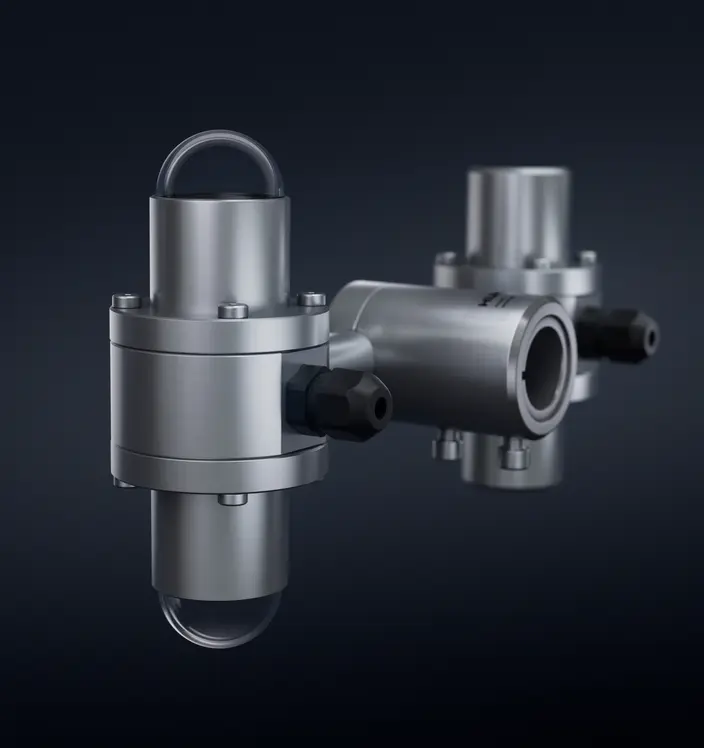
The NR01 net radiometer has a modular design with two pairs of identical sensors. This makes it possible to take the instrument apart, easily replace individual sensors, and recalibrate them by using the same procedure. For this reason, it is often selected for use in large monitoring networks.
In order to prevent condensation on the pyrgeometer windows, the NR01 features internal heating close to the pyrgeometers, keeping the instrument above dew point. Since water blocks longwave radiation, heating will improve the reliability of longwave radiation measurement, especially at night, when the risk of condensation is highest. Solar offsets in longwave radiation measurement are very low. Features like these have made NR01 net radiometers a popular choice for energy balance and surface flux studies.
NR01 is also practical to mount. It is much lighter than competing models and includes a 2-axis leveling assembly. The assembly fits a 1-inch NPS tube (recommended outer diameter: 33.4 x 10⁻³ m). With the included NR01 shim, it can also be mounted on a ¾ inch NPS tube.
Suggested use
- energy balance studies
- surface flux measurements
- climatological networks
Accessories
Areas of application

Related products