TP08
Small size non-steady-state probe for thermal conductivity measurement
Request a quote
Ask your question

- NSSP probe
- 70 mm needle length
- wide suitability
Small size non-steady-state probe for thermal conductivity measurement
TP08 is a probe that offers the possibility to perform a practical and fast measurement of the thermal conductivity (or thermal resistivity) of the medium in which it is inserted at a high accuracy level. It works in compliance with the ASTM D5334-14, D5930-97 and IEEE 442-1981 standards. The TP08 is a small version of type TP02, made for situations where the length of the TP02 poses a problem. The standard TP08 probe has proven its suitability for soils, thermal backfill materials, sediments, foodstuff, powders, sludges, paints, glues and various other materials.
- NSSP probe
- 70 mm needle length
- wide suitability
Specifications
| test method | ASTM D5334-14 and D5930-97 and IEEE Std 442-1981 |
| range (λ) | 0.1 to 6 W/m.K |
| needle length | 70 mm |
| traceability | NPL |
| sensitivity (ΔT) | Thermocouple K, ANSI MC96.1-1982 |
| temperature range (total sensor including cable) | total sensor -55 to +180 °C including cable |
| accuracy (@ 20 °C) | ± (3% + 0.02) W/mK |
| temperature dependence of the accuracy | ± 0.02 %/K (additional) |
All specifications
| test method | ASTM D5334-14 and D5930-97 and IEEE Std 442-1981 |
| needle length | 70 mm |
| traceability | NPL |
| range (λ) | 0.1 to 6 W/m.K |
| sensitivity (ΔT) | Thermocouple K, ANSI MC96.1-1982 |
| temperature range (total sensor including cable) | total sensor -55 to +180 °C including cable |
| accuracy (@ 20 °C) | ± (3% + 0.02) W/mK |
| temperature dependence of the accuracy | ± 0.02 %/K (additional) |
| heating cycle duration | 200 s (typical) |
| power requirements (switched) | 3V, 1 Watt (max) |
| medium/sample requirements | granular materials, powders, slurries, gels, pastes. Some samples require pre-drilling. Sample size: Min 20 mm radius. Min volume 80 ml. Smaller samples: consult Hukseflux. Caution: please consult the product manual for more details. |
| protection needle and base | IP68 |
| protection total sensor | IP67 |
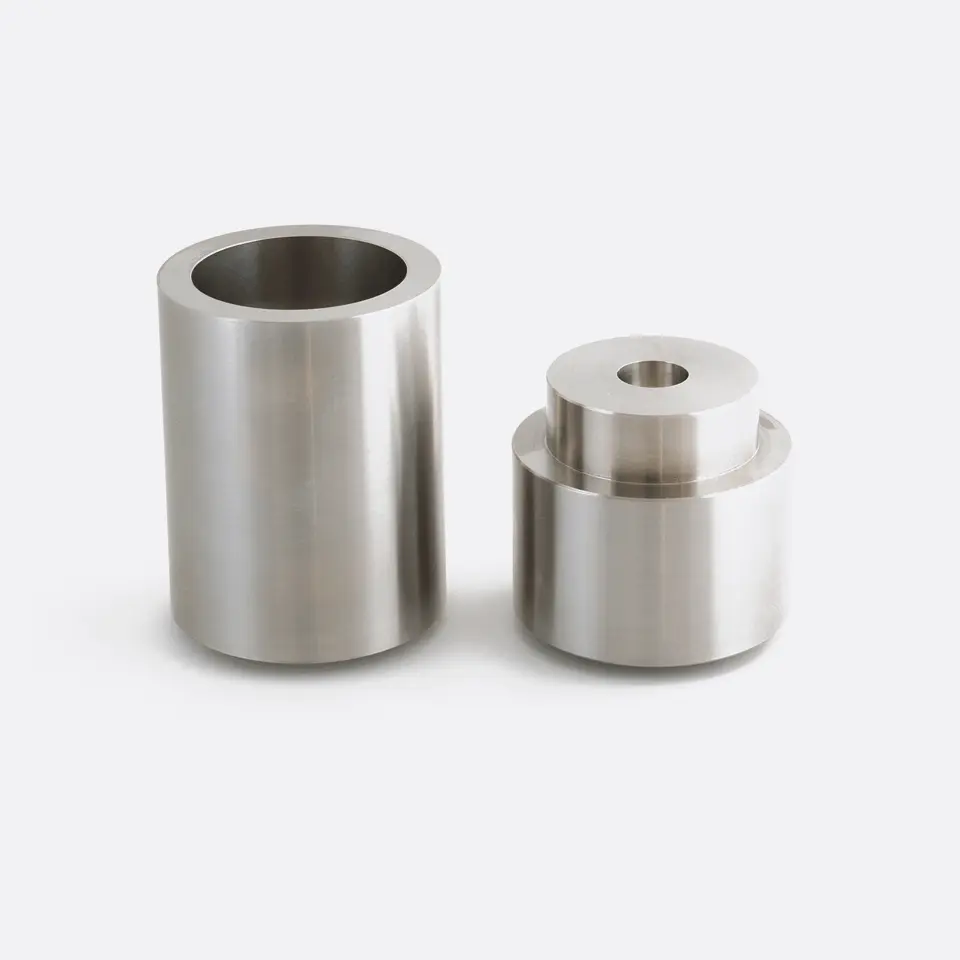
| options | Container TP08: Because of the relative importance of the thermal equilibrium between base and sample, an optional container can be ordered with TP08. Alternative designs: Hukseflux is specialised in NSSP design. Alternative models, for instance smaller, more robust or temperature resistant have been manufactured on request. Permanent installation in soils: The dedicated model TP01 is specifically designed for long term monitoring. A separate brochure is available. |

Interested in this product?
Let's talk about your project, your plant, and the performance data you need. We are here to guide you to the right solution.
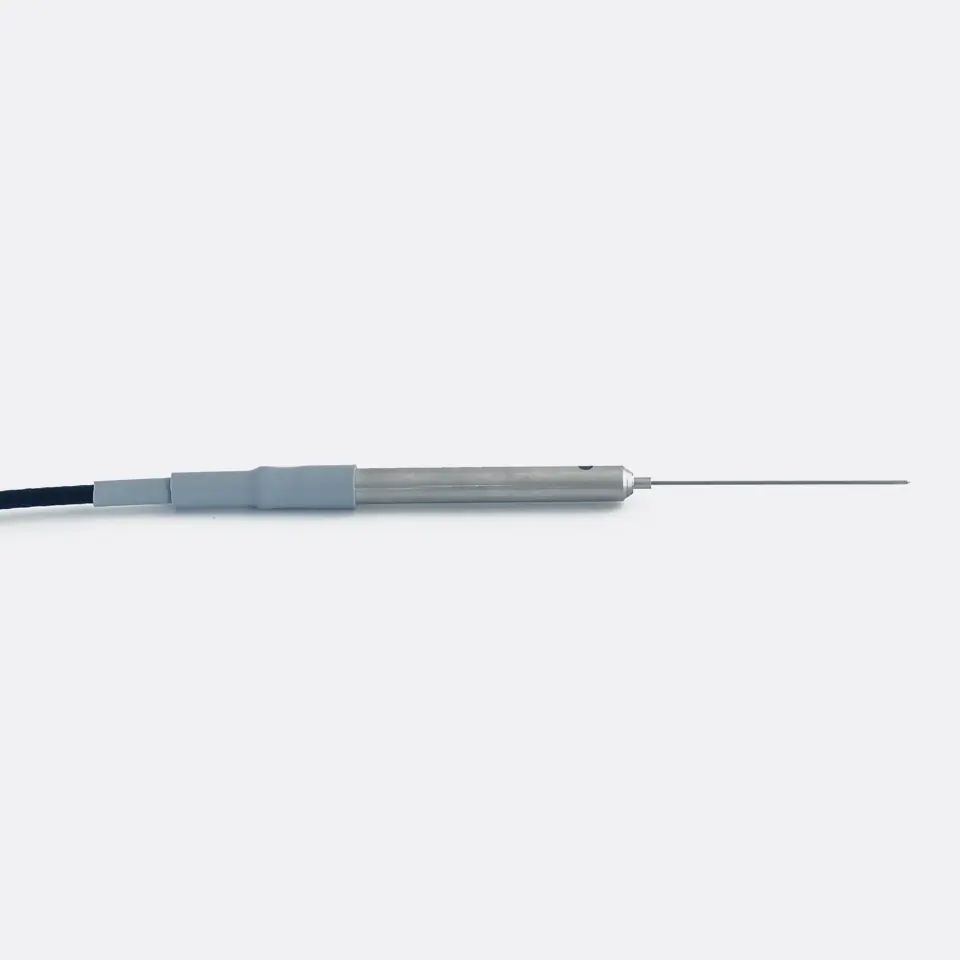
TP08 design
The Non-Steady-State Probe (NSSP) measurement method (also known as transient line source, thermal needle, hot needle, heat pulse- and hot wire technique) has the fundamental advantages that it is fast and absolute while the sample size is not critical. Hukx is specialized in NSSP design. Special models have been developed for in-situ field experiments. For permanent installation in soils, a dedicated model, TP01, is available. TP08 has been designed and tested in collaboration with the Applied Physics Group of Wageningen University.
Hukx specializes in Non-Steady-State probe design. The primary model of the Hukx product range is the TP02. This model offers optimal measurement accuracy by a combination of its design features. For some applications however the requirements regarding the sample size are such that the needle length and diameter of the TP02 are too large. For this category of samples, TP08 has been designed. Having a needle length of 70 mm, with the junction at around 17 mm from the tip, and a diameter of 1.2 mm, samples of around 80 ml can be analysed. (35 mm depth). In some cases samples can even be smaller (consult Hukx). In TP08 the reference junction of the thermocouple is located in the base. A high quality measurement with TP08 requires that not only the sample but also the base are at a stable (preferably the same) temperature. Usually this is achieved by clamping the base into the same material (metal) that holds the sample.
Suggested use
- studies of ocean sediments
- studies of small samples
- studies of high cost samples (uranium sludge)
Areas of application
Related products