Thermal conductivity in material selection: Why it matters and how to measure it
When working on an engineering project, it is essential to control and predict the transfer of heat in the system. Whether you are improving the insulation of buildings or industrial systems to minimize heat loss, designing a high-performance heat sink for a next-generation processor, or developing a thermal protection system for spacecraft, the thermal conductivity of the materials used determines the system's success.
Heat transfer is a dynamic process that is influenced by environmental conditions such as thermal fluctuations, pressure, phase changes, humidity levels, and mechanical stresses. Therefore, understanding the thermal behavior of a material under relevant environmental conditions is essential in the design process to select the ideal material. By using heat flux sensors and specialized thermal conductivity measuring systems developed by Hukx, this thermal behavior can be determined with high accuracy, enabling engineers to optimize the selection of the materials they use.
What is thermal conductivity?
Thermal conductivity is, in essence, a measure of how well a material can transfer heat through conduction. Heat transfer occurs when there exists a temperature gradient over a material. It is defined by Fourier’s law of heat conduction:
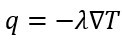
Where,

is the heat flux through a unit area

is the thermal conductivity of the material

is the temperature gradient over the material
The thermal conductivity of the material can then be derived by dividing the heat flux by the temperature gradient.
In solids, thermal behavior is determined by a combination of vibrations in the atomic structure (lattice vibrations) and the movement of free electrons. In contrast, in gases and liquids, it is primarily dependent on the number of collisions and the diffusion of molecules. Solids such as metals, which have a high number of free electrons, therefore have high thermal conductivity, while most liquids and gases have low thermal conductivity.
Heat transfer in different environmental conditions
While thermal conductivity data for a wide range of materials are available in literature, just considering these values for material selection will not be sufficient for some applications. Environmental conditions can significantly affect a material's thermal behavior. Some important environmental conditions are:
- Thermal fluctuations: The thermal conductivity of a material often depends on its temperature. The material can perform well at room temperature, but fails under cryogenic conditions.
- Environmental pressure changes: Pressure changes can alter the shape of a material through compression or expansion. This can significantly affect its thermal conductivity.
- Phase changes: When the phase of a material changes, its thermal conductivity also changes. This is an important characteristic of phase changing materials.
- Humidity: When a material absorbs water from its surroundings, its thermal conductivity will often increase, which could compromise the system.
- Mechanical stress: High mechanical stress over time can alter the structure of a material, changing its thermal properties. This is especially relevant in aerospace or industrial systems where high mechanical stress can be exerted over a long period of time.
These environmental conditions must be considered to make sure a system works as it is intended. This is why measuring thermal conductivity in relevant conditions can help engineers selecting materials.
How to measure thermal conductivity
There are multiple methods to measure the thermal conductivity of a material when exposed to relevant environmental conditions. Which method to use is determined by the type of material. The most common methods used are steady-state measurements and transient measurements.
Steady-state methods
When using this method, the material first must reach thermal equilibrium. While very accurate, these methods can take a lot of time and are therefore best suited for controlled environments.
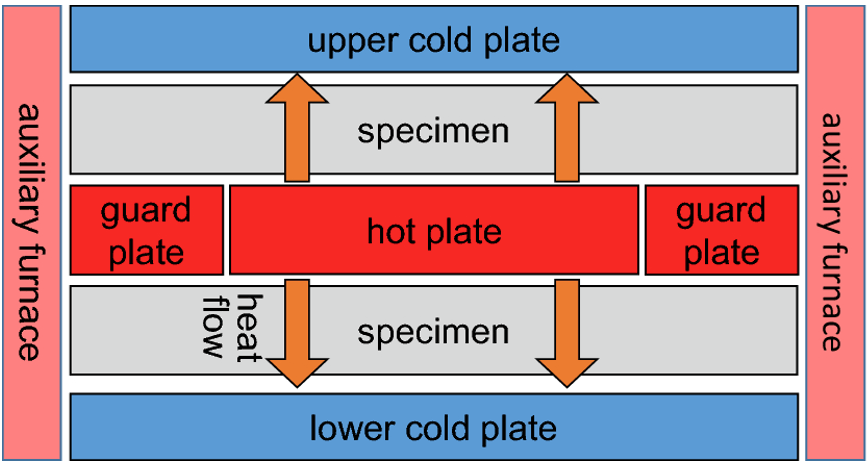
The current international “golden standard” steady state method for determining the thermal conductivity of a material is the guarded hot plate (GHP) method. This is achieved by placing the material between a hot plate and a cold plate, while surrounding it by a guard ring that prevents any heat loss in horizontal direction (see Figure 1). This makes sure the heat flows vertically through the material. The heat flux and the temperature gradient must be measured to determine the thermal conductivity.
Bridging the gap between lab and field measurements
While the GHP method is the most common method, the setups are often very large and complex. This limits it to controlled laboratory settings. Hukx bridges this gap by providing sensors that allow these measurements to be executed in the field.
There are many standards that describe how to perform these in-situ measurements, and which sensors should be used. An example is the ISO 9869, describing the method for determining the thermal transmittance of building envelopes. The TRSYS20 system is specifically designed for these applications and complies with ISO 9869. Furthermore, it complies with ASTM C1046, and ASTM C1155, which are comparable to the ISO standard.
To guarantee accurate in-situ measurements, other steady-state sensors offered by Hukx, including the versatile FHF05 and the industrial-grade IHF01, are calibrated according to ASTM C1130. This ensures their sensitivity is traceable to a GHP defined primary method.
Transient methods
When using the transient method, a heat pulse is applied, and the temperature response over time is measured. This method is very fast and is especially relevant for measuring the thermal conductivity of soils, powders, and highly viscous liquids, as the heat source must be inserted into the material.
Various standards define the proper testing method for determining the thermal conductivity of a material using the transient method. For geological materials and soils, the proper testing procedures are defined by ASTM D5334 and IEEE 442. For polymers and plastics, ASTM D5930 is the applicable standard.
To meet these standards, Hukx offers the TPSYS20 system, which uses a needle probe to apply the required heat pulse. This system is particularly suitable for laboratory measurements. However, to enable field use, it can be powered by a 12 V battery.
Key applications
Knowing the exact behavior of a material's thermal conductivity is important in many applications. These applications can be characterized into two categories: minimizing heat loss or penetration through insulation, and maximizing heat transfer through dissipation. Below, we explore how Hukx’s heat flux sensors bridge the gap between theoretical values and real-world performance across five key industries.
Insulation materials
- The problem: Insulation performance decreases over time due to moisture infiltration and settling, which is difficult to capture in the lab.
- The Hukx solution: Hukx provides the TRSYS20 measurement system that can be used to determine the thermal conductivity of building envelope components, such as walls and roofs.
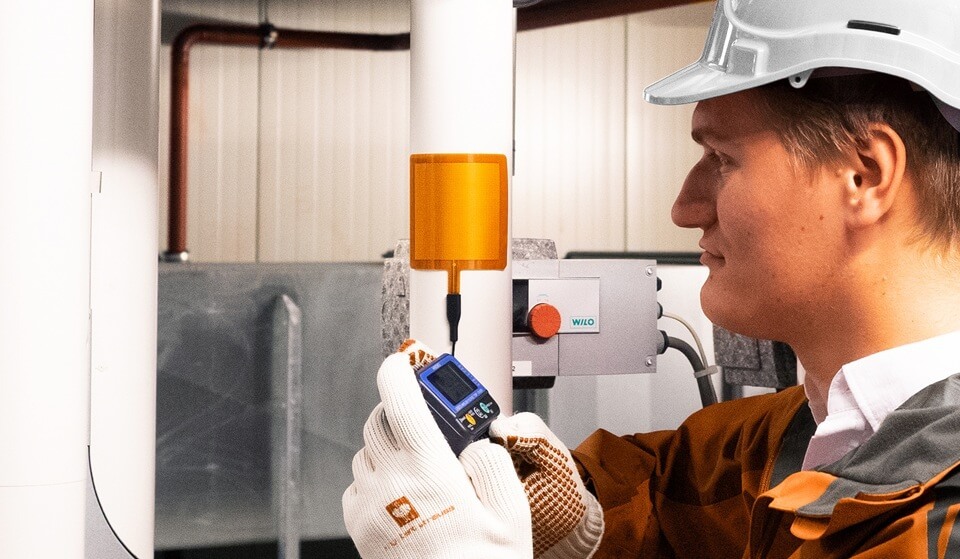
TONZON, a manufacturer of insulation solutions, uses Hukx’s heat flux sensors to map the thermal behavior of these solutions. They also manufacture and monitor insulation systems for pipelines for which Hukx’s flexible FHF05 heat flux sensors are ideal.
- Why it matters: Minimizing heat loss within buildings is critical to reduce our carbon footprint and increase the thermal comfort.
Industrial furnaces
- The problem: High-temperature furnace environments cause materials to degrade chemically and physically over time, altering the material’s thermal conductivity. This changes the performance of the furnace, while it should operate under ideal conditions to prevent equipment failure and maintain safety.
- The Hukx solution: By using Hukx’s heat flux sensors, such as the versatile FHF05 or the IHF01 for harsher industrial environments, engineers can identify thermal behavior during operation.
- Why it matters: Knowing the thermal behavior during operation is vital for optimizing material selection and furnace design. This helps engineers to maintain ideal operation and safety, while keeping the system efficient.
Liquid hydrogen transport vessels
- The problem: Liquid hydrogen is stored at cryogenic temperatures, which makes the design of transport vessels challenging. Liquid sloshing during transport and pressure buildup due to minor heat penetration into the vessel can cause significant problems.
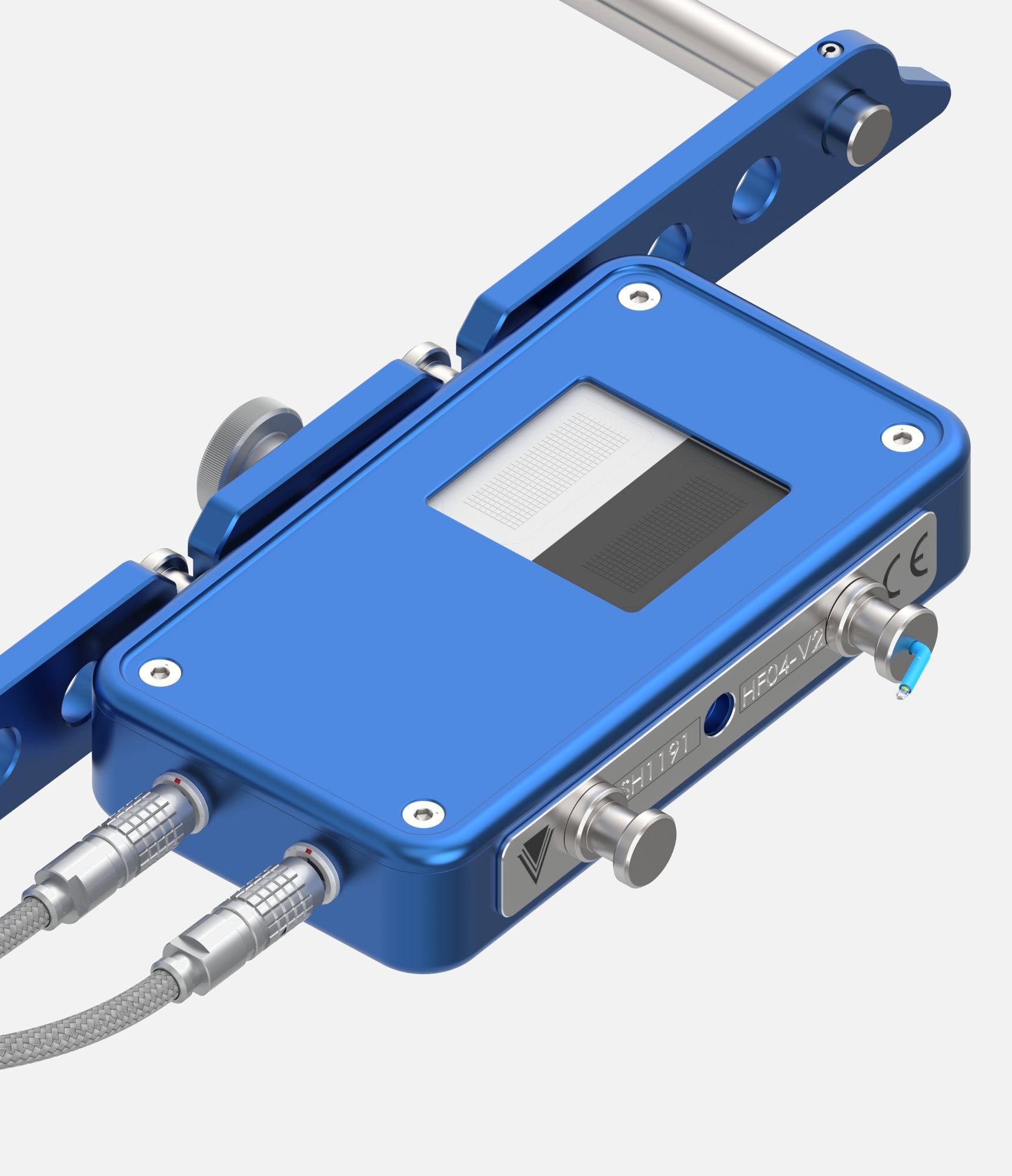
- The Hukx solution: Hukx’s FHF05 heat flux sensor can be used to monitor thermal conductivity in test tanks under transport conditions to provide the relevant data for multiphysics model validation.
- Why it matters: Multiphysics simulation models can be used to simulate these conditions. They are used to optimize vessel designs, for example, by minimizing heat transfer during transportation.

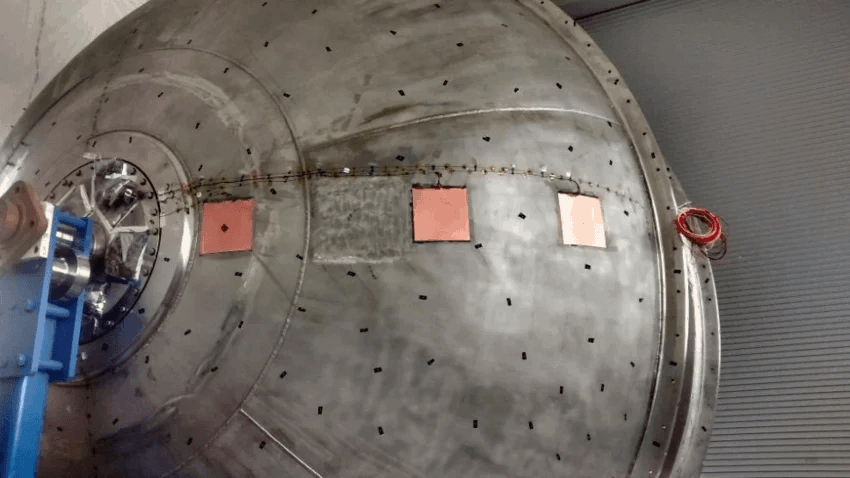
Aerospace thermal protection systems (TPS)
- The problem: Spacecrafts operate in extreme temperatures and vacuum in space, as well as extreme temperatures during re-entry in the atmosphere. Thermal protection systems are used to protect sensitive systems. However, extreme conditions significantly affect the thermal behavior of TPS materials.
- The Hukx solution: Hukx offers heat flux sensors that can operate under the extreme environments found in space and during re-entry. These sensors can be used to determine the thermal conductivity of a material under extreme conditions.
- Why it matters: Knowing how well TPS minimizes heat transfer to sensitive equipment during operation is essential for optimizing material selection during the design of these systems.
Phase change materials (PCMs)
- The problem: PCMs are materials that can undergo a phase transition absorbing large amounts of heat. This is ideal for use as a coolant system for batteries, data centers, and photovoltaic cells. However, during their phase change, the material’s thermal properties change significantly.
- The Hukx solution: The FHF05 heat flux sensor is a sensor that is well-suited for measuring the thermal conductivity of a PCM during its phase change. Furthermore, the TPSYS20 system can be used to determine the thermal conductivity in both the solid and liquid phases of the PCM.
- Why it matters: The thermal conductivity of a PCM strongly influences how fast it can dissipate heat during the phase change and, therefore, how well it performs as a cooling system.

Interested in knowing more about these topics? Visit our case study and library pages for a more detailed look at these applications.
Conclusion
Ultimately, thermal conductivity plays an important role in the performance of materials across buildings, industrial applications, aerospace, and electronics. Engineers need to understand how thermal conductivity can be determined under relevant environmental conditions using Hukx’s thermal conductivity and heat flux sensors. This allows them to properly select materials within their systems that optimize heat transfer through dissipation or minimize heat loss or penetration through insulation.
References
Kim, D., Lee, S. & Yang, I. Verification of thermal conductivity measurements using guarded hot plate and heat flow meter methods. J. Korean Phys. Soc. 78, 1196–1202 (2021). https://doi.org/10.1007/s40042-021-00177-0