Thermal insulation analysis using
flexible heat flux sensors
TONZON & Hukx have worked together to improve home insulation products even further. By using Hukx’s heat flux sensors, an accurate thermal image can be obtained regarding the value and direction of heat flow.
Introduction
To reduce our carbon footprint, it becomes increasingly important to thermally insulate residential homes. Not only does this reduce the energy bill, but it also increases thermal comfort. A market leader in this domain is TONZON which manufactures innovative insulation solutions.
Heat loss in homes
There are various ways in which residential homes lose heat. From the components listed in Figure 2, radiative and conductive heat loss are most substantial regarding the effectiveness of insulation materials.
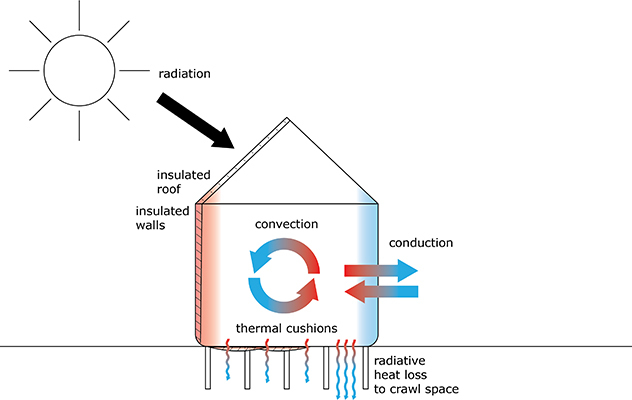
A unique design property of TONZON’s products is the ability to reduce radiative heat loss to near zero. This radiative heHeat loss in homesat transfer is described by:
q = ϵσ(T4-T04 )
Here, q is radiative heat transfer, ϵ the emissivity factor, and σ a constant. The temperature of the surface and surrounding air is given by T and T0. The direction of heat transfer is indicated by the sign of q. To minimize heat loss, TONZON uses materials with low emissivity properties.
Another important factor is the conductive heat loss that takes place due to direct contact of two substances that differ in temperature. The performance of insulation is evaluated using the R-value. This measure represents thermal resistance such that higher values indicate better insulating properties. The following equation can be used to calculate the R-value:
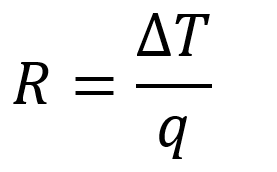
Here, ΔT is the temperature difference across the material and q the heat flux. A high heat flux intuitively indicates a low R-value, reflecting poor insulation properties and significant heat loss.
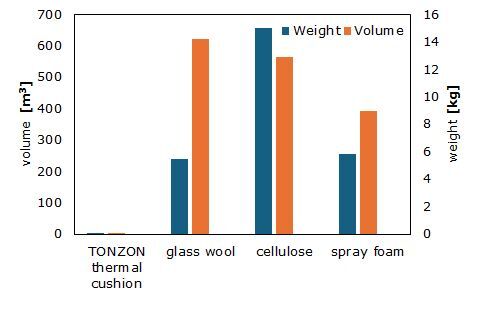
Higher R-values can be achieved by increasing volume (and weight) of the insulating material. However, TONZON uses remarkably efficient designs with air as low thermal conductivity substance and reduced radiative heat loss.
Floor insulation
Homeowners can significantly reduce their energy bill and increase thermal comfort by using TONZON’s thermal cushions, see Figure 2. These thermal cushions are designed to block radiative and conductive heat transfer to the crawl space and foundation walls.

The material efficiency of TONZON’s thermal cushions compared to other common insulation materials is shown in Figure 3.
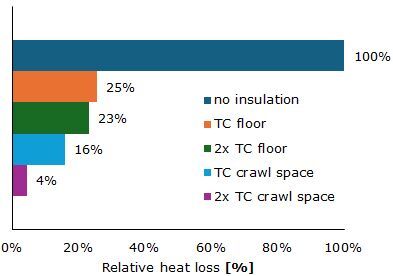
Heat flux sensors can help to analyze the complex heat transfer profile of this method of insulation. For example, a study done by TONZON measured the heat flux above and below the thermal cushions in scenarios with and without floor heating.
Results in Figure 4 show that the heat flux compared to floors without thermal cushions is reduced by around 84 % or 96 % when using one or two layers of thermal cushions respectively.
Pipe insulation
Another application of TONZON’s innovative insulation products is piping insulation. TONZON’s reflective pipe wrap insulation foil overcomes the inefficiencies of traditional foam insulation and reduces heat loss through radiation from your central heating system.
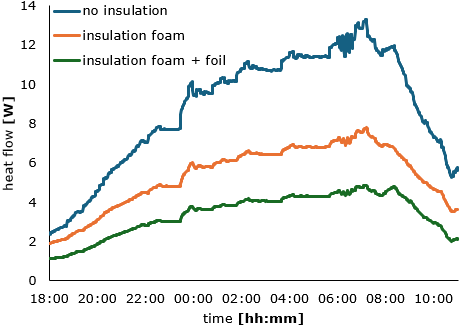
An internal study analyzed the heat flux under three different configurations: no piping insulation and piping insulation with and without the reflective foil. Due to the curved surface, flexible heat flux sensors from the FHF05 series were used.
The capability of reflective pipe wrap insulation foil to block the radiative heat transfer is shown in Figure 5. Compared to piping with no insulation, the heat loss can be reduced by 62 % when using TONZON’s reflective foil. Therefore, this easy-to-apply solution is an efficient insulation method that can significantly reduce energy consumption.
Heat flux sensors for thermal analysis of insulation materials
The complex thermal image surrounding insulation materials can be analyzed using heat flux sensors. Not only do they measure heat loss, also the direction of heat transfer can be determined using heat flux sensors. If you would like more personalized and free advice for your application, contact our experts.
Related products


We like having a good technical conversation
Do you have questions, need help finding the right solution, or looking to discuss an instrument for a unique application? Our technical engineers provide expert advise. Contact us now!