Independent pyranometer test
Independent testing confirms good performance of Hukx pyranometers
Hukx is proud to notice that its pyranometers are consistently among the top performers during independent testing. For example, testing at Sandia National Laboratories by PV Performance Labs (a consultant to the PV industry), calibration experiments at NLR, and analysis of public datasets. We are curious to see the results of the experiment at the Technical University of Denmark.
Introduction
Hukx tests all its pyranometers in production. Class A pyranometers are tested for:
– temperature dependence
– directional response
– sensitivity (calibration)
At present, there are no independent test institutes doing the same indoor testing. However, there are some occasions when independent outdoor testing is done:
– 2016 testing at Sandia National Labs in 2016
– 2024 testing at National Laboratory of the Rockies NLR, USA, at the yearly BORCAL experiments
– 2025 analysis of data measured by NLR by PV Performance Labs
– 2024-2025 Ongoing test Denmark Technical University by Adam Jensen
Sandia testing in 2016
The purpose of the test was to determine the sensitivity of pyranometers and semiconductor solar irradiance sensors using four different methods, and to compare these sensitivities to the one supplied by the manufacturer. The comparison tests were carried out under four different conditions:
– indoor under a solar simulator
– outdoor horizontal
– outdoor tilted at a constant tilt angle
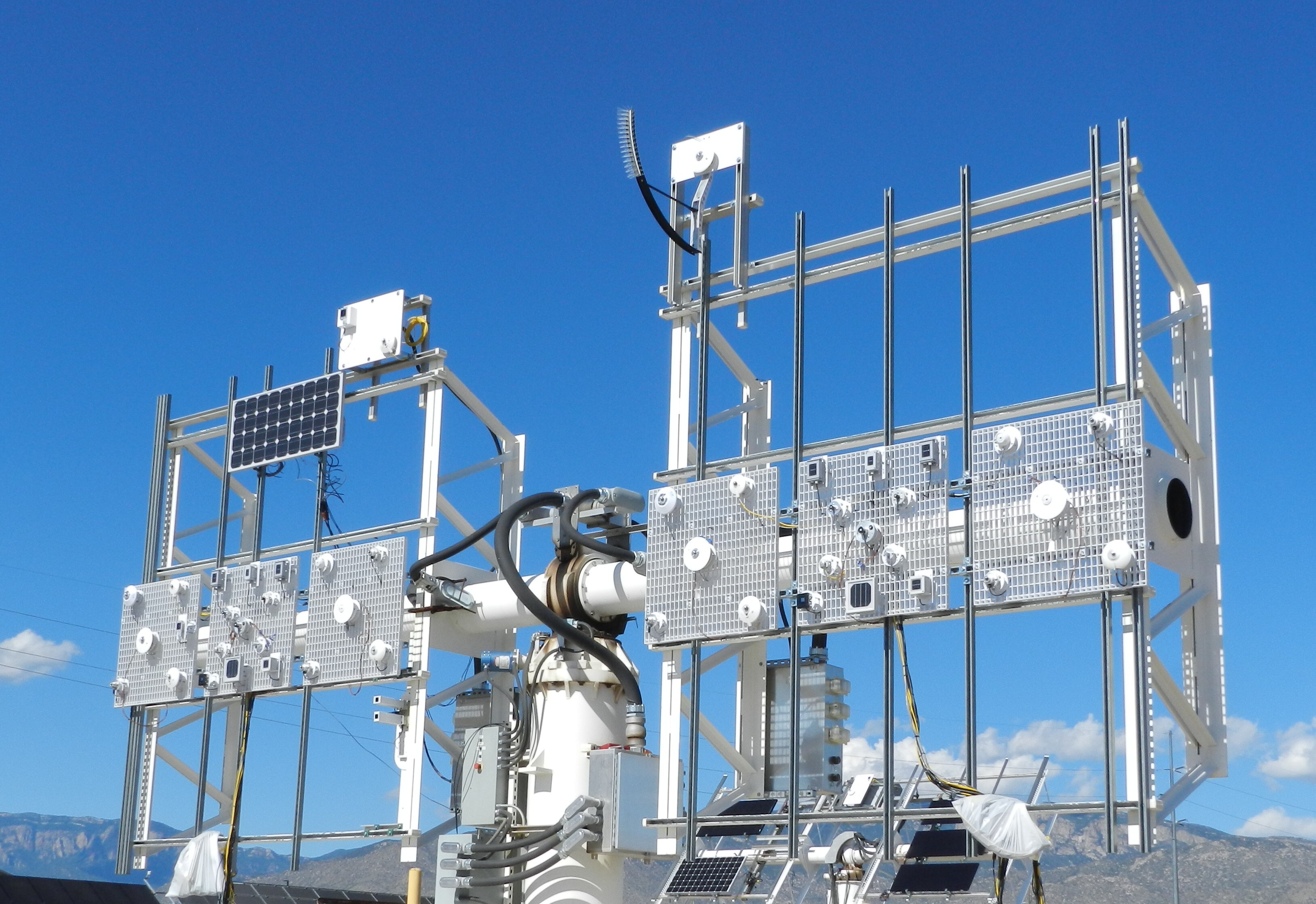
– outdoor on a 2-axis tracker (see Figure 1)
The tests were carried out using four different
instrument types:
– secondary standard pyranometers
– second-class pyranometers
– semiconductor solar irradiance sensors
– PV reference cells
The test results at Sandia
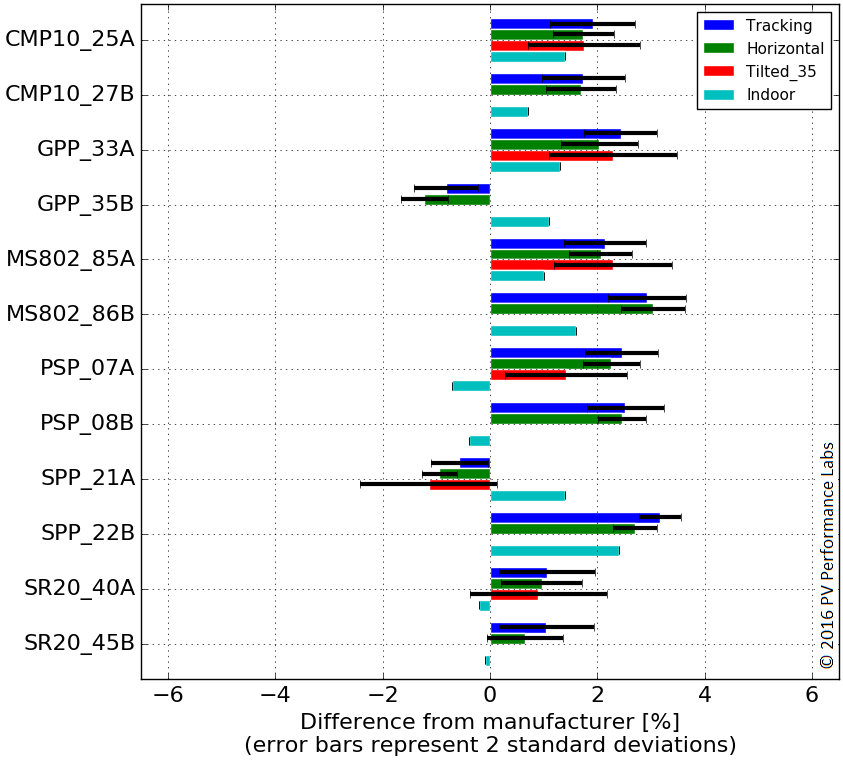
Test results are presented in graphs, like the one in Figure 2. Among the different instrument types, the secondary standard pyranometers show the least variability. The performance of Hukx’s model SR20 (the predecessor of model SR200, model SR30, and model SR300) is remarkably consistent under different test conditions. The report concludes that it is too early to draw final conclusions about the absolute accuracy. We think the causes of the good consistency are SR20’s low zero offsets and high calibration accuracy. Now in 2025, models SR200, SR30, and SR300 perform even better than model SR20.
2024/2025 calibration at NLR
The test results obtained at Hukx are confirmed by independent, publicly available measurements performed in 2024 by the National Renewables Energy Laboratory (NLR).
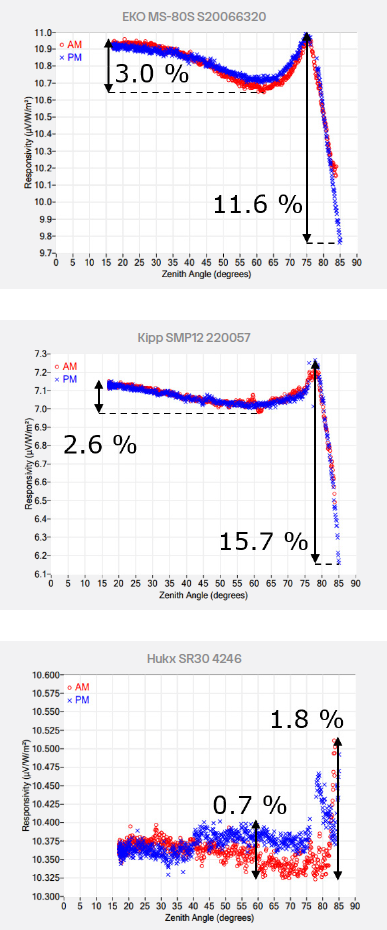
In NLR’s Broadband Outdoor Radiometer Calibration (BORCAL) procedure, pyranometer responsivity is measured outdoors over the course of a clear-sky day. This test is a combination of a calibration and a directional response test.
Figure 3 shows the responsivity of Hukx’s model SR30 and two competing pyranometer models as a function of solar zenith angle. The sensitivity of EKO’s model MS-80S and Kipp & Zonen’s model SMP12 varies by more than 11 % versus zenith angle. In contrast, the SR30 only varies by up to 1.8 %, which is more than 6 times better. At small zenith angles, SR30 outperforms the other models by a factor 4.
These differences are highly significant for the uncertainty of key performance metrics such as the Performance Ratio (PR), since directional response errors dominate the total uncertainty at small solar zenith angles, which are most relevant for the calculation of the PR.
2025 PV Performance Labs analysis of NLR data
In August 2025, PV performance Labs, at the request of Hukx, analyzed the data measured by NLR at the Solar Radiation Research Laboratory (SRRL) at their Baseline Measurement System. SRRL ensures that instruments are well-maintained and cleaned every day, and puts the data measured with these instruments on the internet for all to use.
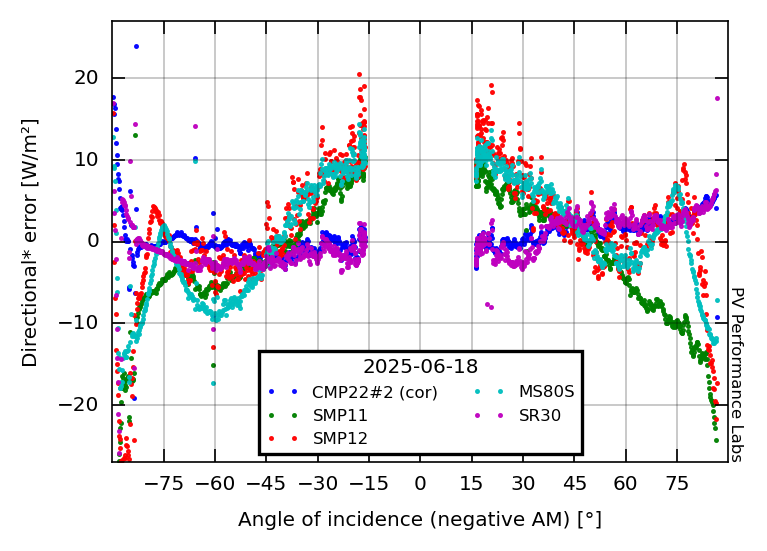
Figure 4 shows the directional response estimates of different instruments based on the analysis of data on June 18, 2025. This analysis is not yet made public.
SR30 outperforms SMP11, SMP12, and MS80S, and behaves equally good as the quartz-dome CMP22.
2024-2026 testing at DTU
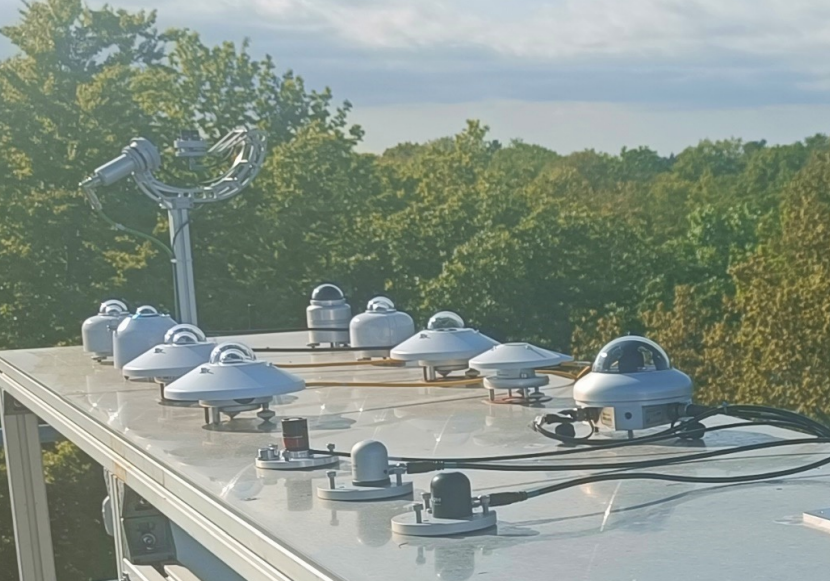
At Denmark Technical University, Adam Jensen carries out an intercomparison of several different instruments used for PV system performance monitoring:
– 12 pyranometers
– 4 pyrheliometers
– 8 diffusometers
The reference instruments are a pyrheliometer and a pyranometer with a shading ball. Results have not yet been published, however a project update was presented at the PVPMC workshop of 2025.
References
Anton Driesse, Willem Zaaiman, Daniel Riley, Nigel Taylor, Joshua S. Stein, Investigation of Pyranometer and Photodiode Calibrations under Different Conditions, conference paper presented at IEEE PVSC 2016, published on internet, accessed 10-Oct-2016.
A. Andreas, BORCAL-SW Calibration Report 2024-03, National Laboratory of the Rockies (NLR), Solar Radiation Research Laboratory, Golden, CO, June 7, 2024.
A. Jensen, Measuring the Sun, PVPMC workshop Albuquerque 2025.
Source for NLR data:
A. Andreas; T. Stoffel; (1981). NLR Solar Radiation Research Laboratory (SRRL): Baseline Measurement System (BMS); Golden, Colorado (Data); NLR Report No. DA-5500-56488.
Related products
More application notes
All application notes


We like having a good technical conversation
Do you have questions, need help finding the right solution, or looking to discuss an instrument for a unique application? Our technical engineers provide expert advise. Contact us now!