GT series
Guiding tubes for thermal needles TP02, TP07 and TP08
Request a quote
Ask your question

- facilitate hard soil measurements
- multiple samples with one single needle
Guiding tubes for thermal needles TP02, TP07 and TP08
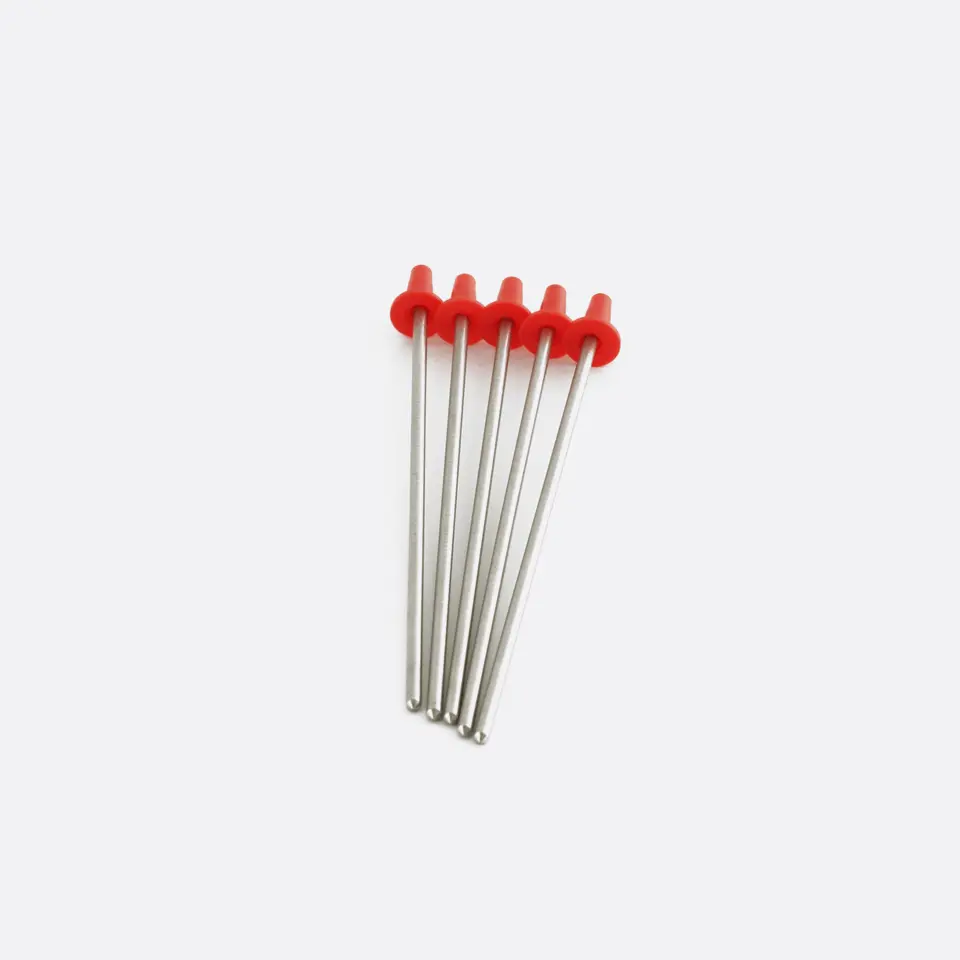
The GT series guiding tubes are accessories for Non-Steady-State Needle probes. They are intended to facilitate measurements in hard soils, concrete, cement and bentonite. Also in case of measurements on large quantities of samples one can use several guiding tubes and one single needle.
- facilitate hard soil measurements
- multiple samples with one single needle
| test method | ASTM D 5334-00 and D 5930-9, IEEE Std 442-1981 |
| delivery | sets of 5 tubes, including caps |
| material | stainless steel |
| needle ends | welded |
| protection tube with cap | IP67 |

Interested in this product?
Let's talk about your project, your plant, and the performance data you need. We are here to guide you to the right solution.
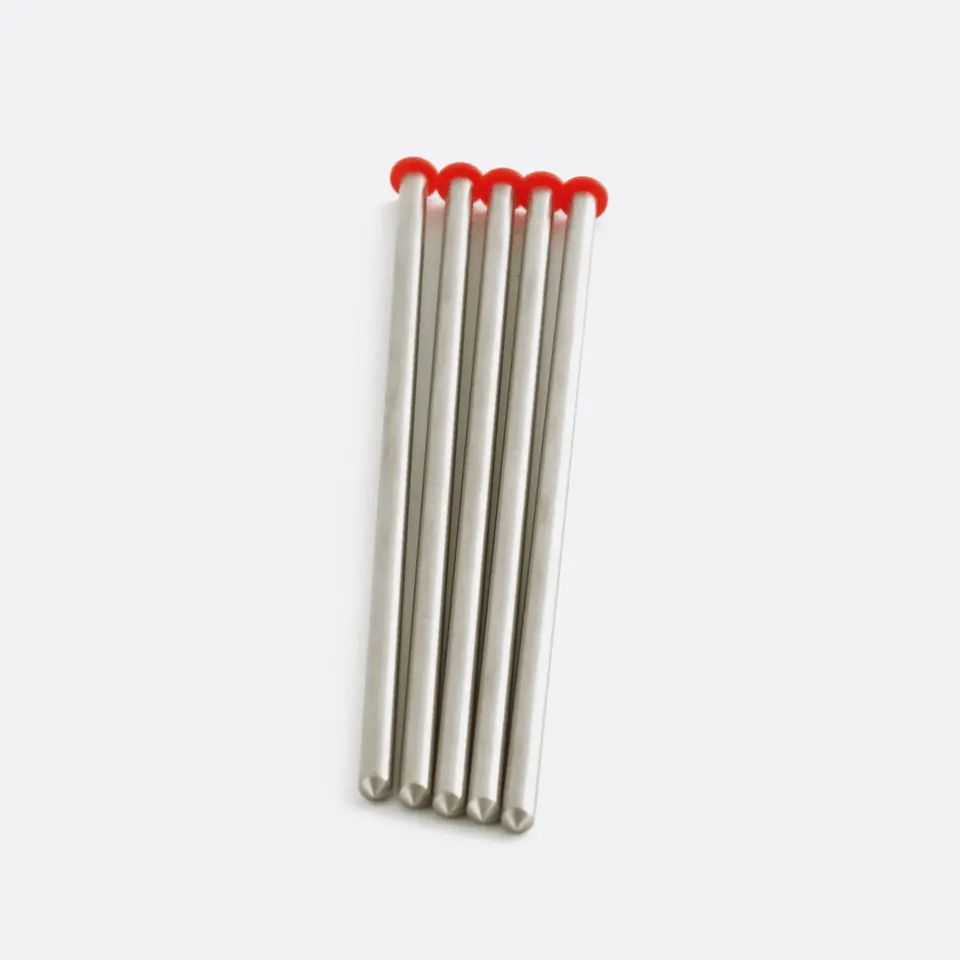
Smart solution for thermal conductivity measurements in hard substances
None-Steady-State Probes are used to determine the thermal conductivity of the surrounding medium. The method can applied in various substances such as sludges, fluids, foodstuff. The most frequent application however is in soils.
A recurring problem is that insertion into hard soils, bentonites and cements is quite difficult. The main problem is that it is quite difficult to insert
needles into these hard materials. The use of guiding tubes in many cases can solve this problem; The guiding tube should be inserted into the medium, and the needle can be inserted at a later stage.
Hukx is a leading supplier of Non-Steady-State Probes, and is the inventor of this guiding tube technology.
Applications
In case of bentonites and cement the guiding tubes are cast into the material and experiments can be carried out later.
In case of hard soils, a typical approach is to pre-drill a hole, insert the guiding tube, compact the soil again, and perform a measurement.In case of dryout experiments guiding tubes are inserted into the samples, dryout can then take place at high temperature (the needle is not inserted).
Suggested use
- studies of ocean sediments
- studies of small samples
- studies of high cost samples (uranium sludge)
Areas of application
Related products