The IEC 61724-1:2021 standard for PV monitoring systems: a quick explanation
Selection of pyranometers for compliance with the new standard
The IEC 61724-1 standard for PV system performance monitoring has been revised. The latest version, released July 2021, defines 2 “accuracy classes.” In conformity declarations, providers must state the accuracy class of the measurement. The class is determined not only by the hardware used, but also by quality checks and measurement procedures. The standard contains detailed specifications at the monitoring system component level. This memo discusses the implications of the revised standard for the selection of pyranometers. It outlines requirements for solar radiation measurements and identifies which pyranometers comply.
Introduction
The first edition of IEC 61724-1: Photovoltaic system performance monitoring—Guidelines for measurement, data exchange and analysis was published in 2008. It has since been updated twice. The latest 2021 version of the standard is fundamentally different from the 2008 edition and has slightly changed relative to the 2017 version.
The new standard includes:
- 2 accuracy classes (A and B) for monitoring systems, to be used in conformity declarations (2017 Class C is now Class B)
- accuracy requirements for monitoring equipment per class
- required quality checks (i.e., calibration and maintenance) per class
- recommended minimum number of instruments based on the PV system scale
- new in 2021: requirements for reflected radiation and albedo measurement
- requirements for tilt sensors included
Consequences
The 2021 version of the standard recognizes solar irradiance measurement as one of the weakest links in the measurement chain. For Class A systems, it specifies the class of pyranometer that may be used, including requirements for dew and frost mitigation, azimuth, and tilt angle accuracy. It also defines cleaning and calibration intervals for pyranometers. Furthermore, the standard defines requirements for measurement of module and air temperature, wind speed and direction, soiling ratio, and AC/DC current and voltage.
Why heating?
IEC 61724-1:2021 requires pyranometer dew and frost mitigation for Class A monitoring systems. Why? Pyranometer domes are made of glass. When facing the sky on a clear night, glass temperature tends to go below dewpoint, causing condensation. Heating and ventilation of solar radiation sensors keep the glass temperature above dewpoint and free from dew and frost deposition. This significantly increases the reliability of the measured data. There is an exception for locations where dew and frost is expected for less than 2 % of annual GHI hours.
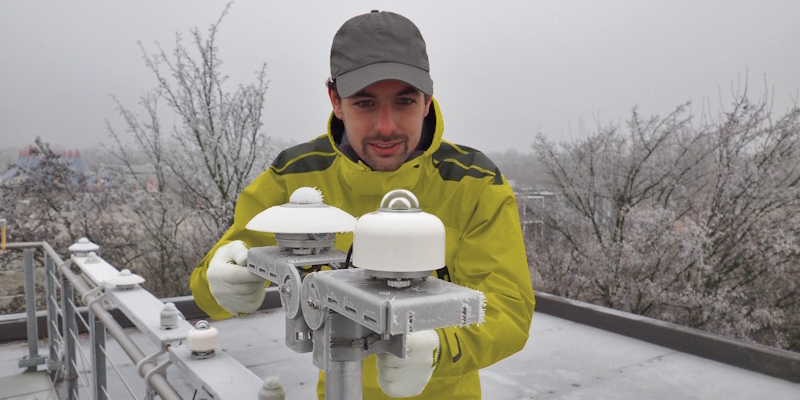
The following tables provide an overview of the main elements of the IEC 61724-1 monitoring classification system, its requirements for solar radiation measurement, and which pyranometers comply with each accuracy class.
Table 1 The main elements of the IEC 61724-1:2021 PV monitoring system classification system.
| Class A | Class B | Class C | |
| accuracy | high | medium | low |
| target application | utility scale PV systems and large commercial |
rooftop or small to medium size commercial new in 2021: |
new in 2021: no longer used |
Related products
More application notes
All application notes


We like having a good technical conversation
Do you have questions, need help finding the right solution, or looking to discuss an instrument for a unique application? Our technical engineers provide expert advise. Contact us now!