Heat flux sensors for PCM-based battery thermal management
Battery thermal management has become more prominent with the increasing demand for larger and more efficient battery packs. Significant heat is generated during the charging and discharging cycles, which affects performance, lifespan, and safety of batteries. Efficient battery thermal management is therefore essential to improve overall performance of batteries which may be done using PCMs.
Introduction
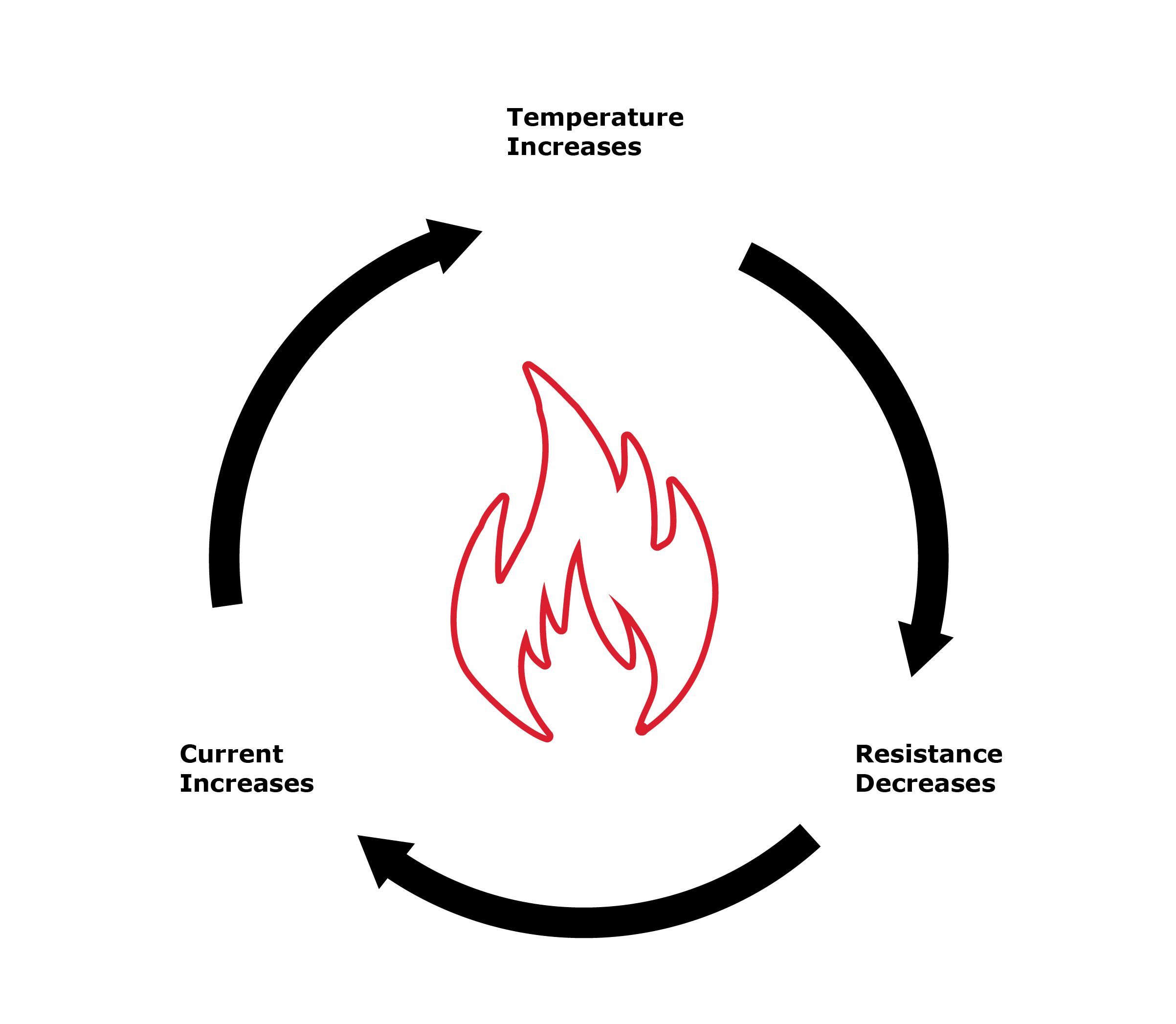
Phase change materials (PCMs) possess the unique ability to absorb heat without a significant change in temperature. This helps regulate the excessive heat generated in batteries, reducing the risk of thermal runaway. See Figure 1.
Although PCMs offer promising benefits, they also have limitations, such as low thermal conductivity. Therefore, improving the heat transfer properties of PCMs remains an important research area for enhancing battery thermal management. The FHF05 series heat flux sensors support this effort through accurate thermal analysis and PCM monitoring capabilities.
How do phase change materials work?
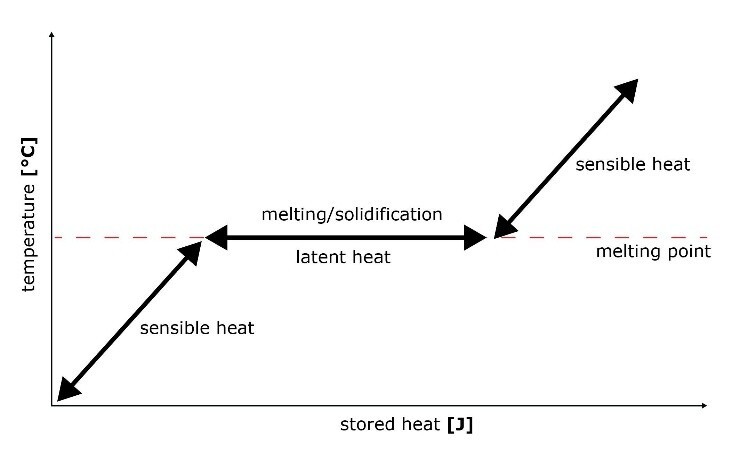
Phase change materials are substances that absorb heat and release heat through phase transitions. The energy is stored in the form of latent heat, which does not increase the temperature. During melting and solidification, temperature remains stable. See Figure 2.
This dynamic of heat transfer comes with numerous benefits, such as
- uniform temperature distribution
- passive cooling (without power supply)
- reduced costs
- low maintenance (no moving parts)
Classification of PCMs
PCMs are typically categorized in three main groups: organic, inorganic, and eutectic.
- Organic PCMs—made of hydrocarbons like paraffin waxes and fatty acids, are frequently used due to their chemical stability and non-toxicity.
- Inorganic PCMs such as molten salts, salt hydrates, and metallic alloys usually have a higher thermal conductivity that allows for increased heat transfer.
- Eutectic PCMs combine both organic and inorganic PCMs to capture both of their benefits.
Among other things, PCMs are selected based on their melting range and thermal conductivity. The optimal PCM depends on the specific application.
PCMs in thermal battery management
Thermal battery management requires PCMs that have a high thermal conductivity, which is a limiting factor for most PCMs. By mixing additional materials such as expanded graphite or nanometals, thermal conductivity can be improved.
PCMs can be integrated into battery packs in various encapsulations to optimize the heat transfer (see Figure 3).
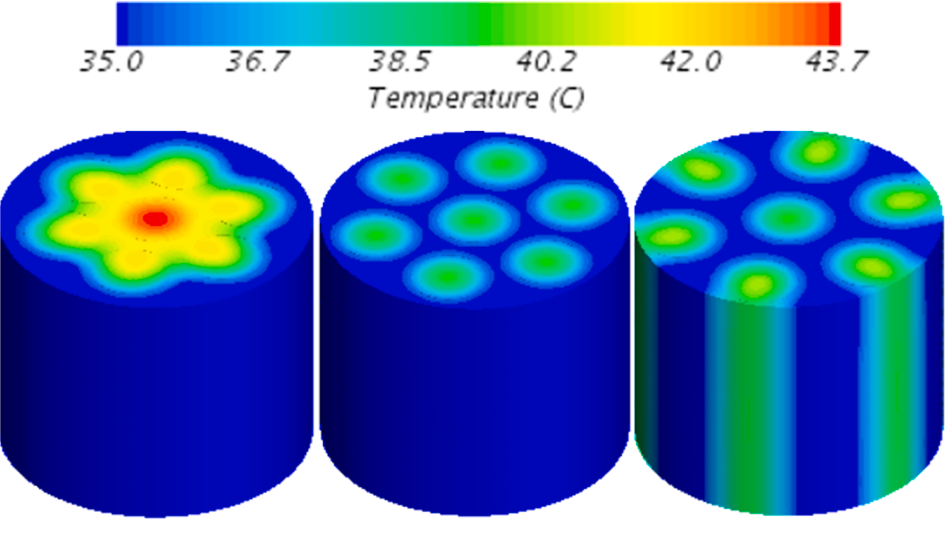
Figure 3 Three different encapsulations result in different heat transfer profiles. An accurate thermal profile can be obtained using heat flux sensors on the battery surface, often combined with thermal simulations.[1]
For accurate thermal monitoring, the flexible FHF05 series heat flux sensors can be used between the contact of the PCM and the battery cells. The heat transfer can also be indirectly obtained by placing heat flux sensors on the battery surface, but this requires complex calculations that include the battery’s thermal resistance and other parameters. Nevertheless, such data can serve as a valuable boundary condition for thermal simulations and the validation of numerical methods.
Temperature measurement limitations
By monitoring the heat transfer between the PCM and the battery, the direction of conduction and thermal conductivity can be determined, which would be strenuous using temperature measurements exclusively. Moreover, changes in heat flux precede those in temperature, and a heat flux sensor is significantly more sensitive to variations in heat absorption. See Figure 4.

Figure 4 Graphs for the three different encapsulations in Figure 3 showing temperature measurements and heat absorption rates measured with heat flux sensors. The sensitivity of heat flux data allows for accurate monitoring.[1]
Heat flux sensors for thermal analysis
In practical applications, battery thermal management systems using PCMs may degrade over time and monitoring the heat transfer can give an accurate picture of the operating state of the PCM. More specifically, monitoring the melting and solidification of the PCM using heat flux sensors ensures safe operation of the battery and prevents thermal runaway.
Additionally, the heat flux sensors can be used for further optimization, such as testing various encapsulation designs or analyzing the effect of thermal conductivity-enhancing materials.
This extends the lifespan, safety, and overall performance of the battery pack, providing an efficient battery thermal management solution to the growing battery market.
References
1. Wang, H. et al., (2021), Heat generation measurement and thermal management with phase change material based on heat flux for high specific energy power battery, Applied Thermal Engineering
Related products



We like having a good technical conversation
Do you have questions, need help finding the right solution, or looking to discuss an instrument for a unique application? Our technical engineers provide expert advise. Contact us now!